November 26, 2025
Jump To:
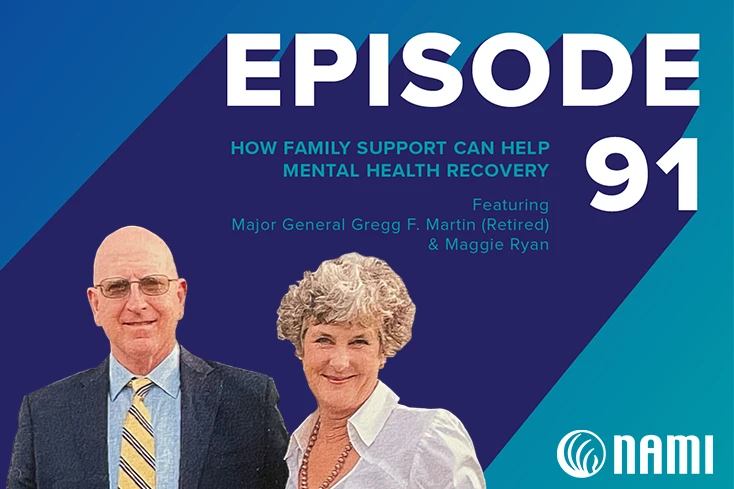
When navigating a new mental health diagnosis, there are a lot of ways someone’s life can change. If family support is available, the journey to recovery and stabilization can feel at least a little less challenging. In this episode, NAMI CEO Daniel H. Gillison, Jr. is joined by Major General Gregg F. Martin, retired, and his wife Maggie Ryan to explore the connections between family support, caregiving, and recovery from mental illness. During this conversation, listeners will hear about what types of support caregivers want, how families can address mental health stigma, and advice about navigating a mental health diagnosis on the journey to recovery and stabilization.
You can find additional episodes of this NAMI podcast and others at nami.org/podcast.
We hope this podcast encourages you, inspires you, helps you and brings you further into the collective to know: you are not alone.
Episodes will air every other Wednesday and will be available on most major directories and apps.
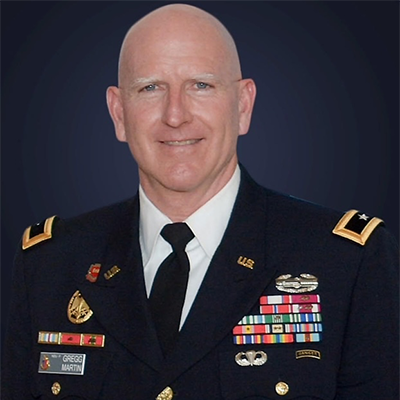
Gregg F. Martin, PhD, Major General, US Army (Retired), served on active duty for 36 years, until May 2015. He is a combat veteran, Bipolar Survivor, Airborne-Ranger-Engineer qualified soldier, and Army Strategist.
He holds a Ph.D. and two master’s degrees from MIT, master’s degrees in national security strategy from both the Army and Naval war colleges, and a bachelor’s degree from West Point. He commanded an engineer company, battalion, the 130th Engineer Brigade in combat during the first year of the Iraq War in 2003-04, including the attack from Kuwait, up the Euphrates River Valley, to Baghdad and beyond.
He served multiple overseas tours, and, as a general officer, commanded the Corps of Engineers Northwest Division, was Commandant of the Army Engineer School, commanded Fort Leonard Wood, was Deputy Commanding General of Third Army/US Army Central, Commandant of the Army War College, President of National Defense University, and Special Assistant to the Chief of Engineers. He was awarded the Distinguished Service Medal (twice), the Bronze Star Medal, and the Combat Action Badge.
He is married with three sons, two of whom are Army combat veterans, and one an artist. His wife is an “Army brat” and heroine for persevering though their Army career and surviving and overcoming their bipolar ordeal, which has been the toughest fight of their lives. They live in Cocoa Beach, FL, where he is writing, speaking, and sharing his story of “battling bipolar disorder” to help save lives and stop the stigma.
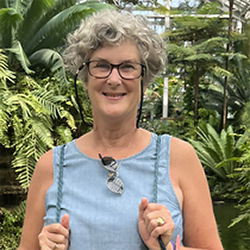
Margaret Ryan, Maggie, grew up in an Army family and spent many of her early years in Germany where her father was stationed numerous times. After getting her BA in Political Science she returned to Germany and worked as a bilingual executive assistant for two German companies. It was there that she met Lieutenant Gregg Martin to whom she has been married to for 43 years. Over the years she has raised three boys, sold Mary Kay, been a West Point tour guide and done the heavy lifting of running a household of five while moving every other year and juggling the various duties of “Army Spouse”. Loving her retirement in Cocoa Beach, she continues to be an avid reader, gardener, sampler stitcher, knitter and quilter.

Dan Gillison brings expertise in non-profit leadership and a passion for advocating for people with mental illness to NAMI. Before coming to NAMI, Dan led the American Psychiatric Association Foundation (APAF), where he was responsible for strategic planning, personnel management, board communications, oversight of APAF’s public education programs and outreach, and formulating strategic alliances and partnerships to further APAF’s mission. Prior to APAF, Gillison led County Solutions and Innovation for the National Association of Counties, where he was instrumental in repositioning the organization’s programs to provide expertise in health and human services, justice, and public safety.
Dan has more than 30 years of experience and has previously held leadership positions at Xerox, Nextel, and Sprint. Dan holds a B.A. from Southern University and A&M College. Dan spearheaded the creation of the CEO Alliance for Mental Health in 2020, which represents some of the most vulnerable and diverse populations affected by disparities in the mental health care system. The leadership collective has collaborated to identify and amplify their priorities for creating a future of quality mental health care for all who need it. Dan serves on lululemon’s Mental Wellbeing Global Advisory Board.
00:00:00:00 - 00:00:26:23
Gregg
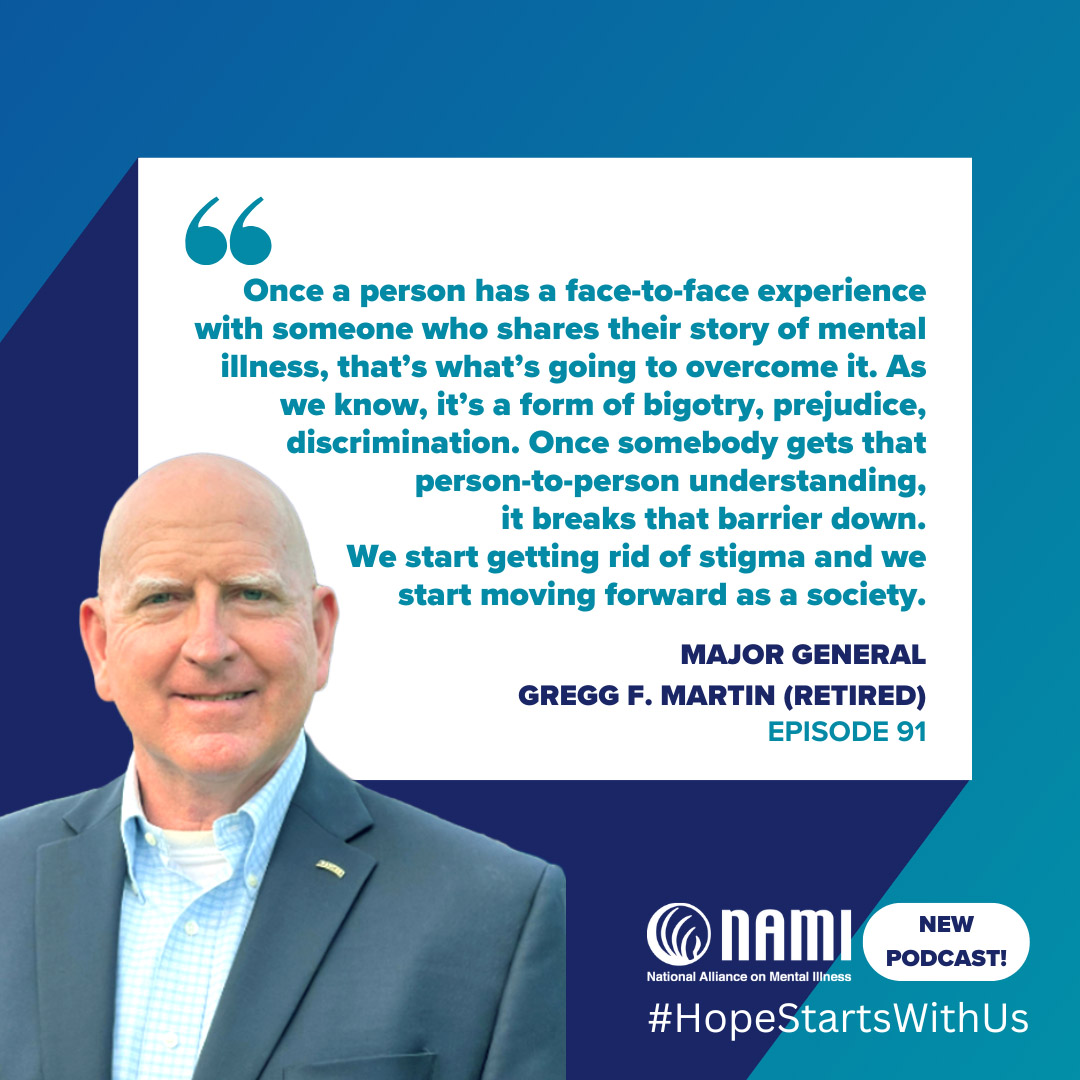
Once a person has a face to face experience with someone who shares their story of mental illness, that's what's going to overcome it. Because as we know, it's a form of bigotry, prejudice, discrimination that once somebody gets that person-to-person understanding, it breaks that barrier down. We start getting rid of stigma and we start moving forward as a society.
00:00:27:00 - 00:00:50:24
Dan
Welcome to Hope Starts With Us, a podcast by NAMI, the National Alliance on Mental Illness. I'm your host, Dan Gillison, NAMI's CEO. NAMI started this podcast because we believe that hope starts with us. All of us. Hope starts with us talking about mental health. Hope starts with us making information accessible. Hope starts with us providing resources and practical advice.
00:00:51:01 - 00:01:15:10
Dan
Hope starts with us sharing our stories, and hope starts with us breaking the stigma. If you or a loved one is struggling with a mental health condition and have been looking for hope, we made this podcast for you. Hope starts with all of us. Hope is a collective. We hope that each episode, with each conversation, it brings you into that collective so you know you are not alone.
00:01:15:12 - 00:01:45:19
Dan
So let me introduce our guest, Major General Gregg Martin, retired, 36 years United States Army, and his wife, Maggie Ryan. Gregg is a NAMI ambassador, a mental health advocate, retired Army general who lives with bipolar disorder. He is the author of Bipolar General: My Forever War with Mental Illness. He previously joined NAMI for episode number 57 of this podcast, "Leading and Living with Bipolar Disorder."
00:01:45:21 - 00:02:10:10
Dan
Maggie is his wife, his closest supporter and encourager. And as we were talking before, we wanted to make sure that we brought the team together. So I want to say thank you for your service, Gregg, and your service, Maggie. Because if Gregg served, you served. So NAMI is always, very, supportive of our military and want to make sure that we say that at the very top of this conversation.
00:02:10:11 - 00:02:32:13
Dan
Thank you for your service. So as we do that, I wanted to invite you both to join the podcast, especially this month, which is both National Family Caregivers Month and National Veterans and Military Families Month, because during the last time Gregg joined the podcast, he mentioned how critical the support he received from family and especially you, Maggie was.
00:02:32:18 - 00:02:56:19
Dan
And we want to shine a light on how family support can make a difference in recovery from mental illness. So as we start the conversation, Gregg, you previously mentioned that the support Maggie provided when you first received the diagnosis for bipolar disorder was especially helpful, but maybe not in the ways people would expect. There could be some tough love involved.
00:02:56:19 - 00:03:05:09
Dan
And that's what you shared in the book. Can you tell us more about how Maggie's and your family's support helped you on your recovery journey?
00:03:05:11 - 00:03:28:18
Gregg
Yes. Thank you, Dan, it's really an honor to be on and a huge shout out to NAMI for the fantastic work you all do. And also to all the veterans out there. So when I got diagnosed, Maggie was already an experienced caregiver for people with mental illness because two of our sons had been diagnosed with bipolar disorder as teenagers.
00:03:28:20 - 00:04:05:13
Gregg
So she had learned a lot about bipolar disorder, mental illness, how to help someone who is afflicted. And so she was very knowledgeable, compassionate, supportive. She actually went to the, appointment at Walter Reed, where I got the correct diagnosis. And it was over a period of years. It was my seventh time going to the doctor's office to get evaluated, and each time they told me, you're fine, there's nothing wrong with you because they couldn't see through my success as an Army officer.
00:04:05:17 - 00:04:41:02
Gregg
But the seventh time Maggie came to the appointment and provided critical collateral information that helped the doctors connect the dots and see that, in fact, I had bipolar disorder. And then they gave the right diagnosis. So things that Maggie did, I would say, was general support all the way for a couple of years when I was in really very bad shape, and it pretty much shattered my life, could have destroyed me, could have killed me.
00:04:41:04 - 00:05:06:00
Gregg
But at a certain point, after I was out of the Army, Maggie sort of put that tough love in there. And an example is I had a very good relationship with the VA hospital, in White River Junction, Vermont, and it's a bit of a drive. It was very hard for me to muster the willpower and the energy and the motivation to drive myself.
00:05:06:02 - 00:05:30:14
Gregg
This was an hour drive to the, to the hospital. And I'm like, Maggie, can you please give me a draw--can you please drive me? I can't do it. It's too hard. I just can't do it. I was so depressed and at a certain point Maggie said, "No, drive yourself. I'm not going to drive you. You can do it.
00:05:30:16 - 00:06:00:15
Gregg
I know you can." And guess what? I did. I got up, got the keys, went outside, and I drove the one hour drive. And what ended up happening is, it became very therapeutic for me to make that drive by myself from where we lived to the VA hospital. And I would-- I would think and meditate and listen to inspiring music.
00:06:00:18 - 00:06:09:13
Gregg
And so that is like one example where her push helped move me through this crippling depression.
00:06:09:15 - 00:06:30:10
Dan
Wow. Thank you. Thank you, Maggie, and thank you, Gregg. And, you know, Maggie, your husband has always told me from when I first met him. And I come from a military family, and I just kept calling him General, and he said, just call me Gregg. And I kept calling General. So if I do that now, it's out of respect for the uniform and for your service.
00:06:30:10 - 00:06:49:11
Dan
And, Maggie, I almost want to call you a general. So, thanks for what you did. So may I ask you, Maggie, what methods of support did you feel helped the most? And was there anything you tried that left you feeling especially encouraged? I know you must have felt encouraged when you said no. Get up. You can drive yourself.
00:06:49:13 - 00:06:52:01
Dan
So I wanted to ask you those two questions.
00:06:52:03 - 00:07:15:23
Maggie
Well, you're probably going to think this is pretty selfish, is that one reason that I really encouraged him to go by himself is because I needed time by myself. So I-- you know, I had to have, like, some time to think about things and kind of regroup, have a little bit of time alone.
00:07:15:25 - 00:07:21:22
Maggie
And, that's something that I found to be very, very therapeutic for me.
00:07:21:24 - 00:07:22:12
Dan
Mmhmm.
00:07:22:14 - 00:07:47:13
Maggie
I also have to say that with Gregg, I felt like I was very, very fortunate because he had been in a mania. But when he finally ended up going to the doctor, really, and getting the diagnosis, he was very depressed. So he knew that the mania was great, but the depression was really a lot worse. So he really wanted to get better.
00:07:47:13 - 00:08:19:16
Maggie
He did not sort of a flounder. He wasn't in a constant mania where I couldn't get through to him because by that point he had gone to a depression. So, I think it would have been a very different story if he had not wanted to improve. I knew how he was before he went into the depression, and it wasn't that he necessarily wanted to be in the mania, but he wanted to be how he was before. You know, regular.
00:08:19:18 - 00:08:20:06
Dan
Yes.
00:08:20:08 - 00:08:41:12
Maggie
He really dedicated himself to doing that. And sadly, not everybody does that. I think that's one of the difficult things with mental health is that some people, especially with bipolar disorder, they don't necessarily want to get better, you know, if they're in a constant mania and they're feeling on top of the world all the time, why should they?
00:08:41:14 - 00:08:59:12
Maggie
You know, life is good. But because of the depression, he knew that, he wanted to be back to normal. And so he was. So when I said, okay, you have to go, you have to do this, you know, he went to his appointments. He did all of that stuff, and he really tried to get better.
00:08:59:14 - 00:09:19:10
Dan
Well, thank you for sharing that. And I wanted to say something when you said, "well, Dan, it was little selfish reason. I needed to take care of me." I want our audience to hear about self-care. We can't help anyone else unless we take care of ourselves. So what Maggie just shared is very important. It may seem very small, but it's very important because she's there for all of it.
00:09:19:14 - 00:09:49:18
Dan
But she recognized that I needed a little space and I needed to do self-care. Self-care is real, so I want to make sure I said that. The other thing is, as we talk about, General Martin, Gregg Martin, I want to give you a little bit of background before I ask Gregg, this question to you, because, you know, we often we are high charging, in terms of, we're very, focused on getting that next task done and being the very best we can be.
00:09:49:18 - 00:10:15:21
Dan
So I want to tell you a little bit about Gregg here, and I'm going off of script a little bit, but this is important to this conversation. Major General Gregg Martin, doctor, general, U.S. Army, retired, served on active duty for 36 years. Combat veteran, airborne ranger, engineer, qualified soldier, and army strategist. He has managed battalions.
00:10:15:23 - 00:10:46:20
Dan
He was there in Iraq, in the first year of the war. And I will not do him justice. But where I'm going with this, is that also, the Army and Naval War colleges, if you think about, what I'm talking about with General Martin. Performance, performance, leadership, leadership, supporting troops. And when you're doing all of that, sometimes you--it's hard to step back and think about
00:10:46:20 - 00:11:13:21
Dan
well, what about me? So, I hope that's okay. Gregg, to share that because, I've read your book multiple times, and I'm always taken aback about, your trajectory, your success, and then how you shared, how it came full circle into the assessment and diagnosis and then how your colleagues in the military helped.
00:11:13:21 - 00:11:38:09
Dan
But where I want to go now is having community in your corner, having community in your corner is a key indicator that someone can achieve, stabilization and recovery. Gregg, can you tell us more about the support system you had? Family, of course, but also friends, past colleagues, the VA, and maybe even your local NAMI. I'm not sure, but I wanted to just ask that collective kind of a question about the community and your support system.
00:11:38:11 - 00:12:08:20
Gregg
Community and people and connection have been critical. I got-- I think I got pretty good support when I was finishing up my Army career. Although some of my friends and colleagues did kind of, you know, drop out of the scene because of stigma and they just couldn't understand what happened. Then I kind of floundered a little bit after I left the Army and went into the civilian community.
00:12:08:22 - 00:12:31:14
Gregg
Things really picked up when I went to the VA hospital. I was reluctant to go to the VA for quite a while because I had this psychotic delusion that I was being spied on, would be arrested, convicted, thrown in jail and murdered. And so I was resistant to go to the VA until an army battle buddy, a wonderful guy,
00:12:31:16 - 00:12:55:21
Gregg
he persisted in getting through to me when I was incommunicado because my depression was so bad and he worked. If he couldn't get a hold of me, he would go through Maggie. And then he worked me and said, Gregg, you can get better. You've got to go to this VA hospital. I know one of the doctors. It's really good. They can help you.
00:12:55:23 - 00:13:49:21
Gregg
So I got into the VA hospital and right away they evaluated me and said, you need inpatient care. You need to stay with us for a while. You are in very bad shape. You have passive suicidal ideations which could metastasize into active ideations, and you could be dead. And so I was admitted to the VA hospital, and I had a marvelous multidisciplinary team of psychiatrists, therapists, nurses, chaplains, etc. this incredibly motivated, compassionate, caring team of experts and they wrapped their arms around me and they--it's like they could see into my soul and help me with what I needed to sort of rebuild my shattered spirit in emotion and mind.
00:13:49:23 - 00:14:17:04
Gregg
And, that was a great experience. And then out of that, they finally got me on the right medication, you know, which for me, the lifesaver was lithium. I also take Lamictal, but the lithium changed the course of the illness. And after years of being in just abysmal condition, the depression went away. The psychosis went away, the suicidal ideations went away.
00:14:17:06 - 00:14:46:11
Gregg
And that began my journey of recovery. Then we moved to Cocoa Beach for the sun, the brightness, the warmth. And that has been therapeutic for my brain. Then once we got here, we had a strategy. You know, get plugged into the VA in Florida to test the medication, do the therapy, embark on a very healthy lifestyle of sleep, diet, exercise, walking on the beach, riding their bikes, going to the gym.
00:14:46:13 - 00:15:13:21
Gregg
And then we said, you know, we're in a great place. We need to meet people. We have to develop a network of friends. And so we actually developed a strategy to meet people like every day and develop friendships and community. And we were very open with everybody that, I live with bipolar disorder. I want you to know that you're a friend, I trust you, you can be part of my peer support group.
00:15:13:23 - 00:15:39:09
Gregg
And here's the symptoms of bipolar disorder. Here's what mania looks like. Here's what depression looks like. If you see me going into any of that, tell me. Tell Maggie. And they have. I mean, they have actually helped me nip some manic escalation in the bud. The other huge thing was to get involved in the faith community and, you know, faith in a higher power.
00:15:39:09 - 00:16:01:07
Gregg
And I think that has been critical, as well as having a purpose in life. Purpose is just critical because in the Army, I had a purpose. I had a mission. When I got out, I didn't. So my new mission was to, you know, recovery. But then I said, hey, God, there's got to be more.
00:16:01:09 - 00:16:28:14
Gregg
And so I've got this purpose of sharing my bipolar story to help stop stigma, promote recovery, save lives, and encourage and give hope to other people. There's no substitute for perseverance. Recovery from serious mental illness is not for the faint of heart. It is hard. It hasn't been a steady path up. I've had rough patches, setbacks. It's been hard.
00:16:28:16 - 00:17:02:00
Gregg
But, you know, drawing on the fighting spirit, not quitting, getting smarter, learning, you know, being a warrior and not quitting is key. And then the last thing and I'll--then I'll stop, is this idea of perspective, being able to think objectively about my own thoughts or metacognition. Super important because a lot of times our own thinking deceives us, takes us astray, and leads us down a destructive path.
00:17:02:02 - 00:17:18:23
Gregg
So this ability and working with a therapist is really key. And Maggie, and I, and my son--bipolar sons--we have conversations about this stuff, and we help each other understand what's going on and how to, how to deal with it.
00:17:19:00 - 00:17:48:02
Dan
This is this is incredible. And, Maggie, I'd like to ask you your observations. Gregg just talked about perseverance. He talked about perspective. Love to hear your perspective. And, we know that you, Gregg, and your sons were not alone on the journey. And with your experience, your knowledge, if you could reflect back, what support do you wish you'd had as you started navigating this journey?
00:17:48:08 - 00:18:14:02
Dan
And is there anything else you'd like to share about the support you did have? So was there anything you wish you had and if so, what that looked like? And the support you had? Gregg talked about his multidisciplinary team there at the VA. What did the team look like in community? And, and because, you know, we, I say we, sometimes the husbands show up one way, but the wives really know.
00:18:14:02 - 00:18:16:17
Dan
So what did it look like for you?
00:18:16:19 - 00:18:55:21
Maggie
Well, at first, I really had no idea what was happening. I knew something sort of weird was going on, but I thought it was all stress and, nobody from, you know, his work life--one person did come and was very oblique, but so oblique that I didn't even understand, like what she was referring to. And it was kind of the same when you're going to the doctor. Like they go to the doctor, the person goes to the doctor, but they never asked your spouse to accompany you to the doctor.
00:18:55:23 - 00:19:19:21
Maggie
So finally, when we, when we went for that one appointment to Walter Reed, at the time when he was depressed, you know, the doctor was asking me about that, and I was the one who actually said, well, you know, it's so weird now because it seems like he was just running around kind of craze, like in a mania is pretty much what I said.
00:19:19:21 - 00:19:40:18
Maggie
And then it was like "bing," you know, a little light bulb went on in the head of the doctor and then you're saying, "Aha!." You know, and the things in the mania were just like, I didn't really even understand what was going on. Like his behaviors. Because, you know, Gregg has a kind of personality, you know, this hyperthermia where he's always super positive.
00:19:40:20 - 00:20:01:23
Maggie
So this was only-- this was like positivity, like to the nth degree. And, you know, when you live with somebody who's always like that, a little bit more positivity, you know, seems kind of weird, but you sort of like get it, you know, it doesn't seem so weird that you're thinking, wow, this is like really weird. There's something really going on.
00:20:02:04 - 00:20:29:10
Maggie
So it really wasn't until near the end that the behavior really started to get out of control. Then when we went up to, New Hampshire. So by the time we went to New Hampshire, he was really mentally incapacitated. So, you know, I had to, you know, pretty much do everything. I had to do, you know, the whole pack out, the whole move, getting stuff into storage, getting rid of a bunch of stuff, getting us up to our house.
00:20:29:10 - 00:20:46:06
Maggie
We had a house up in New Hampshire, you know, thank goodness that we could, you know, move into. By this time, he had been seeing doctors. When we got up to New Hampshire, as soon as we got up there, he had a crisis. We had to go to the emergency room. And then I was just like, oh, my God, this is just, you know, this is terrible.
00:20:46:06 - 00:21:09:05
Maggie
I thought as soon as we left, you know, Washington, D.C., things would get better. And then suddenly it's like, oh my gosh, this is awful. And, but, you know, because that happened and he sort of filtered right away into their mental health system, this is a quite a long time before he went to the VA. And so, he started to see a psychiatrist.
00:21:09:05 - 00:21:43:01
Maggie
And, you know, my mother-in-law was there. So we would kind of talk about it, but neither of us really understood bipolar disorder all that well. And doctors, you know, at that point I wasn't going to the doctor. Psychiatrists are very close-mouthed about having, you know, the--your spouse come in and discussing the whole thing with you, you know, very closely. You know, I went once or twice and you know, to him it seemed like, oh, yes, of course, you're having this psychosis because you have bipolar disorder.
00:21:43:06 - 00:22:07:21
Maggie
Well, you know, okay, great. But that doesn't really tell us, like, how the psychosis is just sort of like twisting everything. So I suppose it's kind of a roundabout way of saying I was pretty ill-prepared and, you know, I was, you know, reading different things. I was like reading books online, trying to, you know, help myself. I had a few friends that I could kind of talk to.
00:22:07:23 - 00:22:41:04
Maggie
But really, I think the ice kind of broke when he finally, when finally, I think the medication caught up, the psychosis broke, and he went to the VA. But even then, he was resistant, you know, toward the lithium. That was--lithium was kind of like the last thing they were going to try. Finally, at the very end, you know, I finally talked to, you know, his friend that he referenced and, you know, the doctor, I, you know, spoke to him and I said, you know, we have to do something different because this is just not working.
00:22:41:04 - 00:23:21:15
Maggie
He's not getting better. He's falling constantly back into this depression. It's terrible. And so then that's when they decided to say, okay, great. Finally said, okay, I'll do the lithium. And then he tried the lithium. And then that was--it was also an immediate, shockingly immediate change. And but of course then you have, I don't call it reparations, but you have everybody along the way that, you know, it was, was sort of with you and things are getting better, but there's still a lot of stuff that happens that you, you know, you have to kind of, you know, recalibrate your life and are you doing the right thing?
00:23:21:16 - 00:23:44:01
Maggie
What about the future? Should we stay there? Should we move away? What was the best thing? And then we kind of made our plan. And, you know, Gregg is great as far as, you know, putting together these, you probably read about "the five fs" and all these various things. He, you know, he's always thinking of stuff and, you know, so he was able to craft a really good program and I you know, I'm like, okay, that sounds good.
00:23:44:04 - 00:24:09:21
Maggie
But really I, you know, I felt I was not very well prepared. And I think that's one of the difficulties too, that everybody's bipolar disorder is different. You know, our son's is different from Gregg's. Our other son is different again. And not everything, not all medications work the same for each person. You know, you rely so much on your loved one telling you how they're feeling.
00:24:09:23 - 00:24:31:05
Maggie
And you know, that's great. But if they're telling you constantly how they're feeling, it's also really depressing for you, the caregiver, because you're constantly being brought down. If they don't tell you, then all the stuff is happening in their brain. You have no idea what's going on, and that is can also be dangerous. So it's really-- I think it's very, very hard.
00:24:31:07 - 00:24:56:11
Dan
Yeah. Thank you. And it's something where you have to find that really tough balance of that. The self-care is and while you're trying to care for your loved one when you don't know, what is and what isn't and what you should and what you shouldn't, so, you know, and that's where, you know, NAMI and other resources are so important.
00:24:56:11 - 00:25:27:18
Dan
And we also-- I just, I was writing some things down as you were speaking. I want our listeners and viewers to make sure that they understand. It is okay to not be okay. It is okay to not be okay. It is okay to ask for help. And, one of the other things that was said here, a little bit earlier was surrounding yourself with people as, Gregg and Maggie moved to Florida and shared their story and reached out to people, is creating that space for friends where it's judgment-free zone.
00:25:27:19 - 00:25:55:08
Dan
You know, we talk about PowerPoint-free meetings, judgment-free zones where people are not passing judgment. Which leads me to my next probe, if you will. And this conversation is fantastic. And thank you for, you know, giving us your time. So, I want to ask you about stigma. Stigma, as we know, can cause people living with mental health conditions to live in silence, to shy away from sharing their stories.
00:25:55:10 - 00:26:17:19
Dan
And, and they make mental health conditions seem shameful. Families can experience stigma about mental health conditions, too. And Maggie, you mentioned recalibrating, that kind of thing. And where I'm going with this is how do each of you address stigma about mental illness and navigating bipolar disorder? What did it look like for you? How have you navigated it?
00:26:17:19 - 00:26:28:13
Dan
And because it sounds so wonderful in terms of the community that you've built. But I know there was this time that stigma must have just been almost overwhelming.
00:26:28:15 - 00:26:50:22
Maggie
When we first got here, we really didn't go out of our way to trumpet the fact that, you know, he had had all this, you know, happened to him. We did meet some people, you know, pretty early after getting here who also had issues. We call them kind of "other brain issues." So they kind of became close friends and so little bit at a time, it sort of came out.
00:26:50:24 - 00:27:13:05
Maggie
And then during Covid, when you decided to write the book, then that's when really, it really, you know, I think there was greater, greater discussion. And now it's like, now we almost think that, wow, there's stigma against mental health. So because I feel like we talk about it so much then, you know, now it's like what? But obviously, you know, there still is.
00:27:13:05 - 00:27:37:17
Maggie
And you know, I mean, Gregg is just really lucky. He's always had a pretty, strong character. He's just always been very sure of himself. So, you know, once I think he knew that he had the, you know, the bipolar, he accepted it and has, you know, talked about it and, and now is like has become an advocate.
00:27:37:19 - 00:28:18:00
Dan
Well, we appreciate his advocacy and your advocacy and your support. And as I mentioned, Gregg at the at the top and I gave a little bit about his bio, but I want to go back to the bio because I don't think I did it justice. Gregg holds a PhD. He has two master's degrees from MIT and master's degrees in international security strategy from both the Army and Naval war colleges, and a bachelor's degree from West Point. Where I'm going is that this is someone that if you judge the cover of Gregg's life, not his book, his life, you would say high performing, very, very focused on
00:28:18:00 - 00:28:50:14
Dan
accomplishments and accomplishing, and has done it at the highest level. Where am I going with my statement is that there's still that piece that we all have to come to terms with, and how am I really doing? How am I doing? Not how am I doing externally? How am I doing? And it is so cool that, General Gregg F. Martin is sharing his story with us, and Maggie is sharing their story because it takes a team.
00:28:50:16 - 00:29:01:03
Dan
So, based on you all's experiences, if you will, what advice would you offer to families who have just started on their journey?
00:29:01:05 - 00:29:32:06
Gregg
I would say, number one, if a person themselves or someone that they care about is thinking they may have some sort of mental health issue, go see a medical professional, go get looked at, get diagnosed. Because if you get diagnosed and you're okay, okay, that's fine. Keep moving forward. But if you're not okay, you need to embrace and own the diagnosis.
00:29:32:07 - 00:30:08:11
Gregg
Just grab ahold of it and say this is reality. And you know, we know scientifically and medically that these mental health conditions are physiological and biological. They're not due to a lack of character or a lack of willpower. So just, hey, this is physically real. Then I would say learn everything you can learn about the condition, whichever, whatever it is that you have, and then develop a strategy. You know, work hard yourself with your care team and develop a strategy that works for you.
00:30:08:11 - 00:30:36:22
Gregg
And it can be different--a little different for everybody, but develop one. And then work hard every single day to manage your condition and keep recovering, because it's more than likely going to be a lifetime journey. It's--you're going to have to keep working it every day, every week to get better. Because like we said before, there will be setbacks and you have to be prepared for them.
00:30:36:24 - 00:31:15:16
Gregg
But don't stop there. Once you start getting healthy and you get your energy back, I would say to imagine and create the life you want to live. I feel like I have and Maggie have imagined and created a new life here in Florida. And for me, this life is all about, you know, sharing my bipolar story, which is a combination of the scientific truth about mental illness being physically real with people sharing their stories, which NAMI does such a great job of encouraging and facilitating and so forth.
00:31:15:18 - 00:31:51:01
Gregg
But it's the combination of those two things that is what's going to crush stigma. It's going to chip away, chip away, and ultimately we're going to win, because it's truth. And once a person has a face-to-face experience with someone who shares their story of mental illness, that's what's going to overcome it. Because as we know, it's a form of bigotry, prejudice, discrimination that once somebody gets that person-to-person understanding, it breaks that barrier down.
00:31:51:05 - 00:31:55:20
Gregg
We start getting rid of stigma and we start moving forward as a society.
00:31:55:22 - 00:32:03:16
Dan
Yeah. Thank you, thank you. Maggie, your thoughts. What advice would you offer to families who have just started on their journey?
00:32:03:18 - 00:32:28:09
Maggie
Well, I think one of the most important things that Gregg said is probably perseverance. You know, it can be a long road and it can be a road with a lot of setbacks and, I feel fortunate that our road has, you know, worked out well. But I know people whose roads haven't. And it's, you know, it can be intimidating.
00:32:28:11 - 00:32:54:04
Maggie
But if you--if both parties want to work at it, as I've seen so often, you know, like, for example, Sarah Schley, who's in the movie, and the other people, those people all they all have partners and family members that are incredibly supportive. And despite things that and that have happened, they're all, you know, they really have stuck together and stuck with each other.
00:32:54:06 - 00:33:17:11
Maggie
And I think, you know, that's what, you know, that's very, very important. You know, it's like anything trying to keep a positive attitude, which is hard when things you know aren't-- may not be going well. But that kind of comes back to self-care and time alone and, you know, getting your, you know, getting things together. So you've got the energy to deal with it.
00:33:17:13 - 00:33:51:12
Dan
Yes. Very important. And we have a resource that is labeled Homefront. And it's what happens on the homefront when that military, person, receives their papers in terms of, you know, going on active duty and what does the home front look like when they come back? And this home front is a resource for the family, that is, navigating what it looks like for them, and it's NAMI.org/homefront. And homefront--
00:33:51:12 - 00:34:20:23
Dan
What does it look like? What does that situational reality look like? And then are there services that you need to look for once you uncover something that just seems different? So, I wanted to make sure that I shared that before we get to the wrap up of the of the podcast. So as we get to the wrap up, we always ask a closing question. Before I do that, though, is there anything that you would love to add that we didn't ask you?
00:34:21:00 - 00:34:47:13
Gregg
I would say two things. The NAMI book that Ken Duckworth wrote, You Are Not Alone, is a fantastic resource, and I would encourage everybody to read that book. It is fantastic. The second thing, I would just, I would like to say, I think Maggie did a great job in-- is really a role model for self-care.
00:34:47:15 - 00:35:17:18
Gregg
I mean, she has essentially adopted this idea of, social rhythm therapy, which, you know, we had never even heard about that until I read the book. But essentially, she was doing it. And what it is, is building a structured, discipline routine of, you know, getting your eight hours of sleep, getting your exercise, eating your meals at a regular time, doing things that make you happy, doing your meditation, your hobbies, gardening.
00:35:17:18 - 00:35:44:03
Gregg
You know, whatever the things are you like and need to do, you build this structured routine and you do it consistently. That's like one of the absolute most important things that anybody can do for their own mental health, mental illness or not. And I think that has really helped keep her balanced, healthy, strong, supportive for this tough journey.
00:35:44:05 - 00:35:50:03
Dan
Thank you. Thank you. Maggie, is there anything that you wanted to add before I ask the last question?
00:35:50:05 - 00:36:16:11
Maggie
Just probably reiterating the fact that I do think that at the beginning, that the--that a family member should definitely go with the person when they go to the doctor. And, we talked about that in a conference that we were at just recently and how important that is, because, you know, you go in to see the doctor and the doctor isn't getting a full picture of the person.
00:36:16:12 - 00:36:50:17
Maggie
And their, you know, their issues. They're getting a one sided version coming from the patient. Patient might say, like Gregg did. Oh, I'm super, super depressed. Like, oh, you're depressed. Okay. Well here, you know, antidepressant, blah blah blah, take some therapy. You know, I think that is very, very important. And I think the medical profession often discourages that. So you might have to, you know, give some, you know, a little bit of push back if you want to go in because you know, now it's all like, well, it's privacy issues and all of this.
00:36:50:17 - 00:36:57:21
Maggie
And I really think that, you know, that is very, very, very important. The one of the most important things.
00:36:57:23 - 00:37:23:01
Gregg
There's one other thing that I mentioned earlier that may have saved my life. When you go and see a psychiatrist or a doctor, they always ask, are you suicidal? And I always said no. Went to the VA and checked myself in, this one doctor said--he asked those questions, my answer was no. And then he said, do you ever have morbid thoughts of death and dying?
00:37:23:03 - 00:37:56:14
Gregg
And I said, "whoa, yeah I have them all the time." They're constant. It's like a movie in my brain. It's just continuous thoughts of these horrible situations where I get killed or murdered or whatever. And he said, okay, describe them. I told them what they were like, and he said, okay, those are passive ideations. They're very dangerous because a passive ideation can morph into an active ideation where you then develop a plan and take your own life and you're dead.
00:37:56:16 - 00:38:23:14
Gregg
And that was the key decision information that led him to say, Gregg, you are veteran. Martin, you need to stay with us in for inpatient care. And, Dan, I've never heard any doctor ask that question before or since, and I've written it in my papers, in my book. And, you know, when I do podcasts and talks, I always talk about this idea.
00:38:23:16 - 00:38:38:22
Gregg
But I would just encourage people to be aware that if they are having these morbid thoughts of death and dying, that is, I mean, that's a passive suicidal ideation. It's very close to an active one and it could lead to death.
00:38:38:24 - 00:39:00:09
Dan
Thank you for that. Thank you very much. And, appreciate you being so open and sharing. And, Maggie, I want to come back to something you also said about going with. You know, we say at NAMI, you are not alone. And part of that is demonstrating that. And so, being there with, with your significant other is making sure they know they're not alone.
00:39:00:09 - 00:39:20:01
Dan
But it's also being that other set of information for the doctor to hear, because the patient is not always going to share. But this is a part of, you and not alone. And the other mantra for us is "nothing about us without us." So us has to be there. And us many times is us as a couple versus as an individual.
00:39:20:06 - 00:39:42:01
Dan
So we wanted to share that. And then, Gregg, you were so pleasant to mention our book by Dr. Duckworth and I want to mention, to the audience, your book: Bipolar General: My Forever War with Mental Illness. That's a very important read. So I want to make sure that our audience is aware of that book.
00:39:42:03 - 00:40:06:10
Dan
And thank you. Thank you for penning it. It's a,it's an incredible read. So as, as we wrap up, we know the world can be a difficult place, and sometimes it can be hard to hold on to hope. And that's why with each episode, we dedicate the last couple of minutes of our podcast to a special segment called Hold On to Hope.
00:40:06:12 - 00:40:13:03
Dan
And it's really asking one question of our guests: what helps each of you hold on to hope?
00:40:13:05 - 00:40:57:18
Gregg
I would say for me, you know, it's a blessing from God to be alive. And if it wasn't for God and Maggie and my family and friends and medical professionals, I mean, I don't think I would be here. I think I'd probably be dead. I would have been dead a while ago. And I think I personally feel that I owe it out of gratitude to God and out of gratitude and love for Maggie and my family and caring for friends and my big community and family, to really do my best, to live my best life, to make a difference.
00:40:57:18 - 00:41:24:11
Gregg
And I mean, you know, the great commandment matters to me. Love God with all your heart, soul, mind, and strength. Love your neighbor as yourself. And so this idea of, you know, selfless service to a cause greater than self. I feel now like this mental health advocacy is my calling, my purpose. I've developed an incredible community of fabulous people who I love.
00:41:24:11 - 00:41:38:22
Gregg
I mean, I never knew any of these people before. They're like the best people, like, in the world. I mean, I can't wait to see them at conferences and things like that. So, I mean, I think, that's what really gives me hope.
00:41:38:24 - 00:41:46:10
Dan
That's fantastic. And thank you. Thank you very much. And, Maggie, what helps you hold on to hope?
00:41:46:12 - 00:42:08:22
Maggie
You know, it's probably very, very similar. I think it's just, you know, the family. I, you know, I love being around the family. I love being around our three boys. You know, our grandson. You know, I have sisters that I talk to, and it's really all--it's really all about them. And, I think that brings the most enjoyment to me.
00:42:08:22 - 00:42:10:06
Maggie
And that's pretty much it.
00:42:10:08 - 00:42:33:10
Dan
That's fantastic. And we're going to, we're going to wrap up. But I also want to say, as we get to wrap up. In meeting Gregg some time ago, Maggie, I was meeting you, as he was talking about the family and the care and his navigation. So it is so cool to meet you in person,
00:42:33:12 - 00:42:57:18
Dan
virtually. So, kudos to you for being such a warrior and being such a significant, support. And, you know, we all lace them up every day and our experiences are all different. But at the end of the day, it's about taking care of each other. And it is so cool to see that with you and with your family. And to your sons,
00:42:57:18 - 00:43:16:14
Dan
I know two of your three sons are in the military, or have been in the military. So NAMI wants to also say thank you to them for their service. So, as we wrap up, this has been Hope Starts with Us, a podcast by NAMI, the National Alliance on Mental Illness. If you are looking for mental health resources, you are not alone.
00:43:16:14 - 00:43:46:19
Dan
To connect with the NAMI helpline and find local resources, visit NAMI.org/help. Text "NAMI" to 62640 or dial 800-950-6264 or NAMI. And now, if you are a family caregiver needing support, NAMI is offering a new helpline. The NAMI Family Caregiver HelpLine is staffed by trained volunteers who have experienced caregiving for a loved one with mental health conditions.
00:43:46:21 - 00:44:15:03
Dan
Whenever caregiving feels overwhelming and you aren't sure where to turn next, a simple call, text or email to the NAMI Caregiver Helpline. When calling, press four to connect with the Caregiver HelpLine. Or if you are experiencing an immediate suicide, substance use or mental health crisis, please call or text 988 to speak with a trained support specialist or visit 988lifeline.org.
00:44:15:05 - 00:44:19:05
Dan
I'm Dan Gillison, your host. Thanks for listening. Please be well.
NAMI HelpLine is available M-F, 10 a.m. – 10 p.m. ET. Call 800-950-6264,
text “NAMI” to 62640, or email. In a crisis, call or text 988 (24/7).