December 31, 2025
Jump To:
In this episode, NAMI CEO Dan Gillison explores NAMI’s accomplishments throughout 2025 in conversation with retiring Chief Innovation Officer Darcy Gruttadaro and Chief Advocacy Officer Hannah Wesolowski. Together, they discuss growth in NAMI’s initiatives focused on youth mental health, success in our advocacy efforts, and the importance of our grassroots community. Listeners will also hear about the significant amount of bipartisan support for mental health policies, as well as the ongoing challenges that remain in the mental health landscape. Finally, Dan, Darcy, and Hannah reflect on what gives them hope and helps them continue working toward mental health equity and increased access to mental health care.
You can find additional episodes of this NAMI podcast and others at nami.org/podcast.
We hope this podcast encourages you, inspires you, helps you and brings you further into the collective to know: you are not alone.
Episodes will air every other Wednesday and will be available on most major directories and apps.
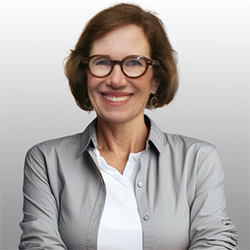
Darcy Gruttadaro is leading the innovation team in their work advancing NAMI’s strategic goals by addressing the mental health needs of youth and young adults; developing and highlighting effective justice diversion initiatives; and focusing on cross-cultural innovation and engagement. She will also be leading our efforts around workplace mental health with
NAMI’s StigmaFree initiative and related work.
Before returning to NAMI in 2022, Darcy directed the American Psychiatric Association Foundation (APAF), Center for Workplace Mental Health. In that leadership role, she expanded the Center’s national reach through new strategic partnerships and by creating a broad array of high impact tools, trainings and resources for public and private organizations in diverse industries. Darcy’s outstanding work was recognized with the 2020 APA Leadership Award.
Darcy is pleased to be returning to NAMI, where she previously served in multiple senior level roles, including leading NAMI’s work on the mental health needs of youth, young adults and their families and serving as Director of Public Policy.
Darcy started her career practicing law at the Harris Beach law firm concentrating her practice on health care, mental health and related issues.

Hannah and the entire Government Relations, Policy & Advocacy team work with advocates, partners and NAMI leaders to enact policy change that will improve the lives of all people affected by mental health conditions. She believes in the power of advocates sharing their stories to advance research, increase mental health funding, improve access to care, expand social supports and decriminalize mental illness.
She came to NAMI in 2017 with more than a decade of experience in advocacy, joining the NAMI team after five years at the Public Affairs Council to help associations, corporations and nonprofit advocacy groups build government affairs efforts programs. She previously led political advocacy efforts at the American Speech-Language-Hearing Association and the American Institute of Architects.
Hannah grew up in New Hampshire and has a B.A. from New York University, where she also earned an MPA from NYU’s Robert F. Wagner Graduate School of Public Service.
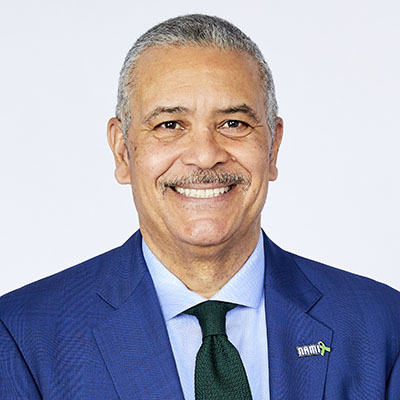
Dan Gillison brings expertise in non-profit leadership and a passion for advocating for people with mental illness to NAMI. Before coming to NAMI, Dan led the American Psychiatric Association Foundation (APAF), where he was responsible for strategic planning, personnel management, board communications, oversight of APAF’s public education programs and outreach, and formulating strategic alliances and partnerships to further APAF’s mission. Prior to APAF, Gillison led County Solutions and Innovation for the National Association of Counties, where he was instrumental in repositioning the organization’s programs to provide expertise in health and human services, justice, and public safety.
Dan has more than 30 years of experience and has previously held leadership positions at Xerox, Nextel, and Sprint. Dan holds a B.A. from Southern University and A&M College. Dan spearheaded the creation of the CEO Alliance for Mental Health in 2020, which represents some of the most vulnerable and diverse populations affected by disparities in the mental health care system. The leadership collective has collaborated to identify and amplify their priorities for creating a future of quality mental health care for all who need it. Dan serves on lululemon’s Mental Wellbeing Global Advisory Board.
00:00:00:00 - 00:00:20:21
Hannah
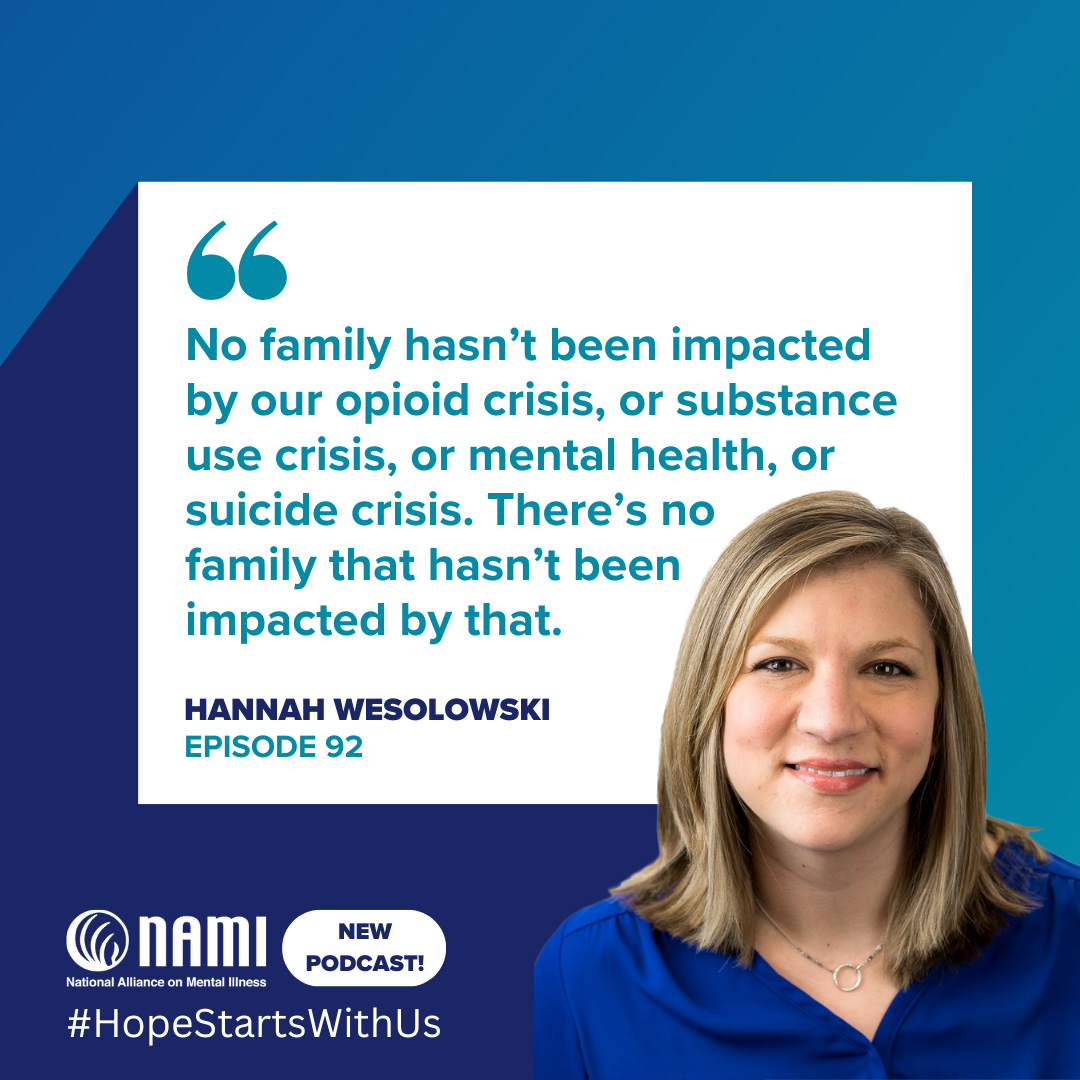
We continue to see strong investments in mental health at the federal level, despite a really tough funding environment where a lot of other things are seeing cuts. I think that's due to the bipartisan nature, because no family hasn't been impacted by our opioid crisis or a substance use crisis, or mental health or suicide crisis. There is no family that hasn't been impacted by that.
00:00:21:03 - 00:00:50:22
Dan
Welcome to Hope Starts With Us, a podcast by NAMI, the National Alliance on Mental Illness. I'm your host, Dan Gillison, NAMI's CEO. NAMI started this podcast because we believe that hope starts with us. Hope starts with us talking about mental health. Hope starts with us making information accessible. Hope starts with us providing resources and practical advice. Hope starts with us sharing our stories, and hope starts with us breaking the stigma.
00:00:51:00 - 00:01:22:21
Dan
If you or a loved one is struggling with a mental health condition and have been looking for hope, we made this podcast for you. Hope starts with all of us. Hope is a collective. We hope that each episode with each conversation brings you into that collective so you know you are not alone. Now we have two wonderful guests today, and really, we want to look at NAMI in the perspective of NAMI 2025 and what we're looking forward to in 2026.
00:01:23:01 - 00:01:51:00
Dan
So our guests are Darcy Gruttadaro, our Chief Innovation Officer, and Hannah Wesolowski, our Chief Advocacy Officer. And I said, Chief Advocacy Officer, let me make sure I get that correct. So this is going to be a conversation with two incredible executives who have done, some, some substantial work this year in moving NAMI forward. And we really would love to get their perspectives on 2025.
00:01:51:00 - 00:02:04:02
Dan
So as we do that, I'll start out in alphabetical order and I'll go with Darcy first and just say, Darcy, what projects feel like NAMI's biggest accomplishments in 2025?
00:02:04:04 - 00:02:38:14
Darcy
Thank you. Dan, it's really a pleasure to be here and to share accomplishments because there have been so many at a time that's been pretty challenging. So I would say the team that I work with, I'll start there, focuses on youth and young adult issues, workplace mental health, cross-cultural innovation and engagement, mental health equity. And we added some innovation pipeline this year to really focus on making sure we were engaging in the most high impact, most, opportunistic for these times--initiatives.
00:02:38:16 - 00:03:06:20
Darcy
So, I would say, very proud of work we are doing to address the youth mental health crisis. We are putting out more and more resources for the school community, knowing that's where children are. We are partnering with community organizations that work directly with children and families, and within the cross-cultural innovation and engagement space. We really focused this year on community conversations.
00:03:06:22 - 00:03:33:20
Darcy
So especially in the Black African ancestry community and Latino Hispanic communities and South Asian communities, and we are adding Native or Indigenous communities. So a lot of community conversations to build trust, to really get a bigger focus on mental health and awareness in communities that can often be marginalized. And then in the workplace mental health space, recognizing 130 million Americans work.
00:03:33:22 - 00:03:58:06
Darcy
So what an important place to meet people where they are. And we know businesses increasingly see mental health as a business imperative. So I'm very proud of the work we're doing. I'm also very proud in 2025 that we are really connecting what have been our more traditional NAMI programs like Family to Family, like NAMI Basics, like Ending the Silence to the newer initiative.
00:03:58:06 - 00:04:23:16
Darcy
So really recognizing how do we bring innovation to what has historically been our traditional programs, to really think about new ways to meet people with information they need, raising awareness, education and more. So we can get at what you mentioned, Dan, which is stigma, which remains a barrier. NAMI's made a huge amount of progress on stigma by being in communities across the country.
00:04:23:17 - 00:04:48:01
Darcy
650 organizations are really on the ground working with NAMI at a national level, at a state level, at a local level, to make sure we're meeting the needs of people. So really proud of the work we've done, really proud of the connection we've made. We certainly work with the government relations, policy and advocacy powerhouse at NAMI. So that's a moment of pride as well.
00:04:48:01 - 00:05:00:15
Darcy
I came from the policy area and Hannah and her team-- I'm going to turn it over to Hannah because they have just done an outstanding job at a very challenging time. So just can't say enough about how great it's been to collaborate.
00:05:00:16 - 00:05:24:03
Dan
So as you turn it over to Hannah and that's a great handoff, just stay posted because I'm going to come back to you to actually elaborate and build off of your body of work in 2025: NAMI NextGen, Youth and Young Adults, the faith-based work. So I want to come back and have you elaborate. So just know that we'll pivot back to you after we go to Hannah to ask the same question.
00:05:24:03 - 00:05:41:23
Dan
And thank you so much, Darcy. Hannah, the same question is, you know, thinking about NAMI 2025, in terms of what you've done, GRPA, what did 2025 look like and what would you say are your biggest accomplishments?
00:05:42:01 - 00:06:14:09
Hannah
Yeah, thanks, Dan, and thanks for those kind words, Darcy. I want to congratulate Darcy and her team for all the great work this year because I really see government relations and the innovation team as hand in hand. You know, we're looking at systemic changes, whereas, the innovation team is really looking at meeting people where they are and giving us the information to know what policies need to be addressed, and how we can change things at the systemic level while they're actually doing the great work on the ground and helping people in so many communities across the country.
00:06:14:09 - 00:06:38:09
Hannah
So very grateful for that partnership. And, you know, it's been a tough year. There's been a lot of changes, and it's been a pretty fast and furious year in terms of what's happening at the federal level in particular. But there are some positives, and I think it's really important that we celebrate what has been positive. First, I'll say NAMI advocates sent over 200,000 messages to Congress this year.
00:06:38:09 - 00:06:58:10
Hannah
200,000. And that just speaks to the strength of our grassroots. We don't sit by and wait for things to happen to us. We want to inform those changes, and we want to make sure our policymakers know the impact of the decisions they're making. And I think that's something everyone involved with NAMI should be proud of.
00:06:58:15 - 00:07:21:22
Hannah
All of those contacts, hundreds and hundreds of meetings by our NAMI leaders with members of Congress throughout the year this year, really, people did not sit by and let changes just occur. They were vocal and, you know, no one has ever accused any NAMI advocate of being quiet. And, I think that is just incredible to see the strength of our alliance.
00:07:22:00 - 00:07:50:16
Hannah
We did see Medicaid changes that are really concerning that'll be hitting us in the next year or two. But because of that advocacy, it could have been so much worse. And I want people to remember that. We have a lot of work to do, and we're still working to minimize the impact of those changes. But because advocates stood up and were vocal, we did limits the impact of some of the widescale change within the Medicaid program that could have happened.
00:07:50:16 - 00:08:14:16
Hannah
And we also saw small pockets of success working with our offices and science and research, we were able to get changes to clozapine, which, treats, treatment-resistant schizophrenia and has been life changing for the people who have benefited from it. But there were really significant barriers that made it hard for people to access and collaborating
00:08:14:16 - 00:08:33:20
Hannah
ears long work, we were really successful earlier this year in getting rid of some of those barriers. So people who will benefit from, using clozapine will not have the same type of barriers we had before. You know, things like that, we have to celebrate, especially during these difficult times. You know, and Darcy talked about youth and young adults.
00:08:33:20 - 00:09:00:08
Hannah
We, working with Darcy's team, we've published a mental health legislation map looking at school mental health requirements across the country. So we put that out this year. So as we advocate and bring programs to schools, we also know what are their requirements and how does NAMI fit into those opportunities across the country? So there's so much work being done at the state and local level by NAMI leaders.
00:09:00:08 - 00:09:10:07
Hannah
And you know, that work will continue. And, you know, despite some difficult changes this year in the policy environment, a lot of positivity to celebrate as well.
00:09:10:09 - 00:09:33:15
Dan
Hannah, thank you so much. And I know that, I know we're talking about 2025, but I want to go back and kind of reflect, in terms of, in our space and in the work that we do, two years ago, you and your team, in partnership with another organization, worked to actually launch the Senate Bipartisan Mental Health Caucus.
00:09:33:15 - 00:09:46:19
Dan
And I'm bringing that up because of the operative phrase in there, "bipartisan." Could you talk a little bit about your work in GRPA and what you and your team do on the Hill from the bipartisan lens?
00:09:46:21 - 00:10:09:12
Hannah
Yeah, that's such an important point, Dan. You know, we always talk about, NAMI doesn't care about your politics. That's-- you know, mental illness impacts everyone from every walk of life. And mental health is actually one of the few strongly bipartisan issues, in the policy space. It's something that Republicans, Democrats, Independents care about and want to do something about.
00:10:09:12 - 00:10:28:18
Hannah
And so these bipartisan mental health caucus, both in the Senate and in the House, are really important to make sure that we're putting forward solutions that can pass, that can make a difference. And we continue to see strong investments in mental health at the federal level, despite a really tough funding environment or a lot of other things are seeing cuts.
00:10:28:20 - 00:10:47:11
Hannah
You know, mental health has been really stable. And so I think that's due to the bipartisan nature because no family hasn't been impacted by our opioid crisis or a substance use crisis or mental health or suicide crisis. There is no family that hasn't been impacted by that, and that includes members of Congress. They truly do care about that.
00:10:47:13 - 00:11:09:12
Hannah
And we saw that just earlier this month, NAMI hosted a year-end celebration on Capitol Hill. We had executive directors from across the country in town, and we had members from both parties come and speak at that event, and be really open about their own personal stories and their families personal stories. And that just speaks to the power of this issue.
00:11:09:12 - 00:11:19:23
Hannah
And, I think the power of the NAMI alliance, that's a safe space that members of Congress come and share things that are so deeply personal, because that's who we are at NAMI.
00:11:20:01 - 00:11:54:22
Dan
There you go. Yes, that is who we are at NAMI. And we say, you know, we want to meet people where they are, and we want to make sure people know they are not alone. That includes our elected officials because they are family members as well. So thank you, Hannah. And Darcy, I want to come back to you and just ask you about, you know, as we think about all of the different, communities, if you will, that, your team worked in and worked with, from the workplace mental health to the faith-based work to the youth and young adults, to NAMI Next Gen, to, colleges and
00:11:54:22 - 00:12:21:21
Dan
universities, to ending the silence in high schools and colleges. Just wanted to kind of give you the opportunity to walk us through a little bit about the ecosystem of what your team did this year and to give you some opportunity to kind of elaborate on any of that work. I was very much impressed with NAMI Next Gen, and we say next generation is who we're talking about.
00:12:21:21 - 00:12:43:01
Dan
And I think everyone knows next gen and that group of young people. We also say, people don't care how much you know until they know how much you care. And you and your team have brought in, consistently, and I think this was the fourth cohort, a group of young adults who really demonstrate they care, so, and demonstrated in the work they do.
00:12:43:01 - 00:12:52:04
Dan
So would you talk a little bit more about our faith-based work and, you know, some of the other work that you and your team did in 2025.
00:12:52:06 - 00:13:14:00
Darcy
Sure. I mean, I love that you remind us often, Dan, nothing about us without us and that is what led you in leading NAMI to say we need a young cohort of people who come and are part-time employees. We actually invest in them joining NAMI for one year, a one-year term, the NAMI Next Gen group is so impressive.
00:13:14:00 - 00:13:37:19
Darcy
We have routinely gotten for ten slots, upwards of 500 to 700 applicants, so this is really a sign that the younger generation is ready to step up. And what do they do? They advise us in key areas. They review our materials. They talk with us about how we can best reach and connect with young people. What kinds of language should we be using?
00:13:37:19 - 00:14:00:10
Darcy
What kinds of programs should we be using? We've sent them to Capitol Hill with Hannah on her team. We've had them as keynote speakers at federal agencies. They are such an impressive young group, and it really goes to NAMI's commitment to young people. And we are starting our fifth cohort. We just accepted and notified ten more young people.
00:14:00:12 - 00:14:31:14
Darcy
And imitation is the highest form of flattery. We're seeing colleague organizations now who are starting their own youth and young adult groups. So I think we're really on to something here in our fifth year ongoing. Also, we--our NAMI on campus program has more than doubled in 2025. So we are over 400 clubs. We've extended it to high schools knowing that mental illness starts-- 50% of mental illnesses start by age 14, and, 75% by age 25.
00:14:31:14 - 00:15:00:03
Darcy
So we know these are conditions that start very young in life. We also know that students at the high school and college level are very interested in getting engaged. We see that through NAMI next gen and the application process, but we also see that through our club development program. And we did work with the University of Chicago, their NORC group on research in 2025 to really better understand, how effective is it? What's our impact?
00:15:00:03 - 00:15:19:21
Darcy
What does that look like? And we saw very favorable results from that. We also saw things we can work on to make it better. That's what the innovation's all about. It's about critically looking at NAMI's work and saying, are we doing this in the best way possible? What we learned is that our NAMI on-campus organizations and clubs have been--clubs,
00:15:19:21 - 00:15:42:01
Darcy
I should say, not organizations-- have been very good at raising awareness and really helping to reduce stigma. The other beautiful thing about NAMI on campus is this is community connected. So this is about our state and affiliates working with these students, working with these clubs. This is not a top-down from NAMI National. This is a community activity.
00:15:42:03 - 00:16:17:16
Darcy
So that's been really exciting to see the expansion, to see the research done on it. And also we just finished doing Sharing Hope Community Conversations on 53 HBCU and other university campuses. This is about really getting students talking more in communities that have not always been open about mental health, talking about mental health and well-being, understanding what are the early warning signs, what should I look for in myself and my friends on campus?
00:16:17:18 - 00:16:49:06
Darcy
This was a huge opportunity to really continue eradicating stigma where stigma can sometimes run very high in diverse communities. And this is particularly important as we see the nation really talking more about DEI. We've seen executive orders that are rolling back funding for programs that have historically been important to diversity, equity, and inclusion. So this is a very important time for us to be having conversations on HBCU campuses.
00:16:49:07 - 00:17:16:13
Darcy
So a lot happening. There's a lot of excitement. We really--we're rolling out in early 2026--to Hannah's point, we now know that states are legislating that schools address mental health. We are rolling out in 2026 a new middle school mental health curriculum, and we developed this in consultation with researchers, first at the University of Texas, now at the University of Oregon.
00:17:16:15 - 00:17:49:05
Darcy
We did a pilot, as we always do, to make sure what we've developed is effective and meets our goals and objectives. And in fact, our pilot was highly successful. So we will have a middle school mental health curriculum so teachers understand better how to have conversations with students. And middle school is such a critically important time. What we know is we have a youth mental health crisis, rising suicide rates, rising ER visits, rising crises among families not knowing where to turn, and turning to NAMI.
00:17:49:07 - 00:18:01:18
Darcy
And I'm hoping Dan, you'll talk about some of our HelpLine numbers, because what we've seen at NAMI is we are the go to resource for so many families at a really increasing rate. So I'll stop there. Hopefully I covered the things you had in mind too.
00:18:01:20 - 00:18:23:08
Dan
Yes you did. And as you mentioned HelpLine. You know, we've seen our numbers go up by over 70% year over year in 2025, in terms of people reaching out to us and calling our helpline. The other thing that we've done is we've diversified the helpline. So, you know, had a young person that came to me, about a year, maybe 18 months ago and said, Mr. Gillison, may I speak to you?
00:18:23:08 - 00:18:44:22
Dan
And I said, sure. They said, well, you know, don't get offended, but when I call the helpline, it sounds like I'm talking to you or my dad. And I said, what what do you mean? He says, well, if you're looking to get young people to call the helpline, they need to hear a voice that they can relate to and sounds like them and not their uncle or their dad or their mom or their aunt.
00:18:45:00 - 00:19:10:09
Dan
I said, okay, well, let's think about this. And so we actually beta tested, a young adult-- youth and young adult helpline and then we actually launched it. So now we have our traditional helpline, we have a youth and young adult helpline and-- option, excuse me. And then we have a caregiver, family caregiver option which we launched on the 17th of November, of 2025.
00:19:10:13 - 00:19:41:11
Dan
So we are really diversifying this helpline because we're seeing the need grow. The need has grown, as I mentioned, over 70, 71% increase in calls to our helpline in 2025. So Darcy, thank you for that. And I also want to mention something, build on something that Darcy said, I want to flip it to another community, the faith-based community. Our faith-based leaders, be they rabbis, Imams, Baptist ministers, priest, Episcopalian, Presbyterian--
00:19:41:11 - 00:20:01:01
Dan
it doesn't matter. What matters is that for years, for decades, they've been the first responders in communities. And that is not in absence of our law enforcement community, our emergency management community, that is talking about community to community in terms of trust. And where does, family go when they're trying to figure out what's going on with a loved one?
00:20:01:01 - 00:20:23:03
Dan
Many times it's our faith-based leaders that first contact where they feel comfortable saying, there's something that's happening and I don't know what I am seeing. Can you help me? So we're trying to make sure that in our faith-based work, we are, you know, acknowledging that. And then we're also looking in terms of our emergency management community,
00:20:23:03 - 00:20:56:08
Dan
and I'll flip this to Hannah, something that Hannah and her team are doing. One of our initiatives and activations is called Reimagining Crisis Response and 988. And Hannah, you've done so much work, and your team's done so much work in 2025, but could would you speak to Reimagining Crisis Response and 988 for a minute and, Darcy, I'll come back to you because we want to talk about some things that are occurring for you in the future and what it means to us and what you're hoping for us.
00:20:56:08 - 00:21:06:13
Dan
So I just wanted to give you that as a future question that's coming your way. Hannah, would you, talk about Reimagining Crisis Response and 988, and the work we're doing there?
00:21:06:15 - 00:21:32:07
Hannah
Yeah. This has been a multiyear effort. I think starting back in 2018, we were advocating for a national three-digit line for people in mental health and suicide crisis. And Congress passed legislation to create that. Back in 2020, President Trump signed it into law, and it launched in 2022. And that's 988, the National Suicide and Crisis Lifeline.
00:21:32:09 - 00:22:04:09
Hannah
So back in 2021, before this was even online, we knew that 988 is great, but it's only as good as the crisis continuum of care in every community. 988 is an entry point. We need other crisis services. And so that's when we launched, Reimagining Crisis Response and really trying to bring together national partners to continue to push this long term effort to make sure every single community has someone to call, someone to respond, and a safe place for help.
00:22:04:11 - 00:22:24:09
Hannah
And, you know, more and more communities have it, but not enough. And so this is, this is a continued priority. You know, I'll say in the last year, we've seen some big wins. You know, we were pushing for, georouting for 988. And that simply means that when you contact 988, you're connected to the nearest call center.
00:22:24:14 - 00:22:52:16
Hannah
None of your personal information or your exact physical location is transmitted, but that you get to local help. So if you need more help, that can be provided over the phone, that can be made available to you. So, in 2024, we succeeded in getting the Federal Communications Commission to pass that for calls. But this year we celebrated, after a lot of advocacy, also getting that in place for text messages. So people can text to 988.
00:22:52:21 - 00:23:15:21
Hannah
And now we're in a process of making sure that when you text to 988, you're connected to local resources. So there's improvements like that. Just this month, the president signed into law the Support Act, which among many other programs included the 988 Cybersecurity Act, which will make sure that we have extra protections in place so that 988 doesn't go down.
00:23:15:21 - 00:23:34:20
Hannah
We've had a few day-long outages with 988 because of some security issues. And we don't want that to ever happen. We want to make sure when somebody needs help, that's available. So we still have much work to do, but we have these milestones that we can celebrate. And every day we make the system a little bit stronger.
00:23:34:22 - 00:23:57:14
Hannah
And we're doing that because it takes all of us. And that's what Reimagine Crisis is. It's bringing together lots of stakeholders. We have over 50 national partners, many in the mental health space, but many outside of the mental health space as well, because it really does impact every corner of our community. So we'll keep prioritizing that, and working to build on crisis response in every community.
00:23:57:16 - 00:24:03:02
Hannah
But there's a lot to celebrate and there's a lot more that's available today than, you know, just a year or two ago.
00:24:03:04 - 00:24:27:09
Dan
Yeah, and this is where we want you to stay hopeful. To everyone that's listening or watching in terms of 988, I would love for you to reflect back on 911. And 911 has only been around about 54, maybe 55 years. So as you think about 988 and the maturation of it, it's very young. And to Hannah's point, it continues to evolve and continues to get better.
00:24:27:09 - 00:25:03:13
Dan
So we're going to stay the course, and we want you to be aware of it and to make sure you're, looking at, what this needs to look like in your community. And, making sure that you reach out to us, and our website, for any questions that you might have, and we'll make sure that we put the links on this message here. One of the things that I wanted to also say, Hannah, is that when I first started going up to the Hill with you and your team, it's very interesting how it's evolved, where we talk about reducing the stigma.
00:25:03:13 - 00:25:28:15
Dan
We had elected officials that would wait until the end of the meeting and say, hey, Dan, could you could you stay back? And they would talk to me in the back room about a family situation. Now they are actually talking in the meetings with their staffs in the room, and they're being open about what their family member or, something that they may know about that they've been navigating from the standpoint of mental health.
00:25:28:19 - 00:25:43:01
Dan
So, you know, kudos to you and your team because you're absolutely addressing the stigma. You're reducing the stigma. And I think in 2025, if my memory serves me correctly, there were, what, 15 visits to each office or something like that, Hannah?
00:25:43:02 - 00:26:10:12
Hannah
Well, every member of Congress has heard from NAMI advocates at least 15 times. But we have met with about two thirds of congressional offices, either staff have or NAMI leaders have this year. So we've covered a lot of ground and had those direct conversations to make sure one, everyone knows that NAMI is a resource because constituents are always reaching out to congressional offices for help when they or a loved one are in crisis or can't find services.
00:26:10:12 - 00:26:30:21
Hannah
So we want them to know that NAMI is a resource. All of our local NAMIs are a resource, but also to make sure that lived experience is part of the conversation. That's who we are. And we need to make sure that any policy that, aims to support or help the mental health community, that people with lived experience are part of that conversation.
00:26:30:21 - 00:26:33:13
Hannah
And so that's what we're bringing to the Hill every day.
00:26:33:15 - 00:26:58:18
Dan
Thank you, Hannah. And again, congratulations on the work. And Darcy, I want to come to you and ask you a, you know, kind of detailed question in a way, and then open question another way. And that is this, that, you will be retiring at the end of this year. Your work actually goes over two decades, in terms of in this space and with NAMI.
00:26:58:20 - 00:27:22:01
Dan
What have you seen from when you started to now, what things did you touch as you've been matriculating through NAMI? What is your hope for NAMI into the future? Just, if you could just kind of give us a lens into your perspective on, first of all, what did it look like? "It," the mental health space when you came in.
00:27:22:03 - 00:27:30:22
Dan
And, you know, I'm not trying to make you feel a senior or whatever, but a couple of decades ago. And what do you see it to be now? And what's your hope for it in the future?
00:27:31:00 - 00:28:04:19
Darcy
Yeah, I mean, I think the, the biggest thing from when I first came in a couple decades ago was not-- a lack of recognition that these are conditions that start early. So all the work on youth and young adults, from an advocacy perspective, from a program perspective, from a resource perspective, that is really exciting and so important. And I think NAMI's made such an important impact. I would say over the last ten years for sure, a steady, increase,
00:28:04:19 - 00:28:47:11
Darcy
but really-- and when I came back three years ago, I was so impressed with the level of commitment that NAMI had made to youth and young adults. I think the 988 work that Hannah leads has been so transformational. It's very-- in a sense, it's very symbolic at the onset, but the work that Hannah's done in pulling groups together to really work together, which in the mental health space is not always easy, but really to work together, all rowing in the same direction on something so critically important to acknowledge that we need a separate number for these conditions because they're so common and because they impact so many.
00:28:47:13 - 00:29:22:23
Darcy
I would say NAMI's work from a communication perspective, the fact that we have, I believe, around 80% of shared media, I'm not sure I'm using exactly the right language, but NAMI's place in the media world when it comes to how much the media outlets rely on us for information. Recognize that we are vast with 650 organizations, that we really understand what's going on the ground, that they turn to us as a reliable resource.
00:29:23:01 - 00:29:50:03
Darcy
I think, too, very impressive with our alliance relations team and how they are working with the field to help strengthen the alliance in critical ways. Because it's not easy to run a small nonprofit out there at the local level. Many of our state organizations are incredibly impressive, and doing such important work on state legislative issues and more. But it is not easy to do it, especially with disruption and change.
00:29:50:03 - 00:30:22:23
Darcy
So strengthening the alliance at all levels of NAMI is so critically important. And I would also say our strategic partnerships. I know, Dan, you've often said partnerships are a force multiplier. And they are. We cannot do this work alone. And the partnerships we've made in the private sector, the partnerships we've made in the nonprofit sector with faith communities, really thinking very strategically around who we should partner with so that we can ensure that people know who NAMI is.
00:30:23:01 - 00:30:44:09
Darcy
What we don't like to hear is people saying, I wish I knew about NAMI before. So I would say the fact that we have been so deliberate about getting our name out there, creating the right strategic alliances and partnerships, really working with the field and learning from the field at the national level. We don't know all the things happening on the ground.
00:30:44:11 - 00:31:07:12
Darcy
So the fact that we have this collaboration with state and affiliates so we can really learn what are the critical issues. What are you seeing in your community, is so important to the work we do. So we are never in an ivory tower. We are always have our finger on the pulse because we have that connection. It's the feel that makes NAMI strong and we do not--we never forget that.
00:31:07:12 - 00:31:34:13
Darcy
Let me say that. We always remember that we are grounded in community activity. So I came back and looked at NAMI and I came back after 17 years, came back three years ago, and NAMI was like a different place in the sense that we had just grown in all the right ways. And our impact is clear. And I believe the road and the path forward for NAMI is incredibly strong and really exciting.
00:31:34:13 - 00:31:47:03
Darcy
And I think good, strong leadership is really makes all the difference. And the fact that we worked so well with the field is really so incredibly encouraging.
00:31:47:05 - 00:32:10:03
Dan
Darcy, thank you very much. And we're excited for your next move in terms of just having some time to invest in family and to relax. So, you know, we wish you the very best and want to celebrate you. And thank you for the service of your time with us and what you've given to NAMI so.
00:32:10:03 - 00:32:13:03
Hannah
Can I add something, Dan?
00:32:13:05 - 00:32:15:12
Dan
I would love you to add something if you'd like to. Yes.
00:32:15:14 - 00:32:44:13
Hannah
So Darcy talked about just the focus on youth and young adults and certainly from the NAMI perspective, much of that is thanks to Darcy. Before she left for her five-year hiatus from NAMI, she led so much of our work, helped start the NAMI on-campus program, did so much great work. And, you know, many people won't remember, but we used to not have these programs called Coordinated Specialty Care across the country.
00:32:44:15 - 00:33:14:12
Hannah
These are programs. They are wraparound services for young people experiencing first episodes of psychosis. Highly evidence-based, amazing. And Darcy led the charge at the--from subject matter level and from the advocacy level to make sure that those were funded through the Mental Health Block Grant program. And in 2008, there were a couple of programs on the West Coast, and there are well over 300 of these programs across the country.
00:33:14:12 - 00:33:38:04
Hannah
And Darcy led that effort. She has done so much in this space. And I just want to recognize that we have only grown to recognize youth and young adults and make them part of our organization and a core part of what we do, thanks to Darcy's leadership on that. So I just, I want to recognize all that she has done. An incredible legacy that she's leaving us with.
00:33:38:06 - 00:34:04:04
Dan
Hannah, thank you so much. And, you know, we talk about peer to peer. There's no greater recognition and acknowledgment than when it's peer to peer. So thank you for sharing that. And really walking us through from the early days to now what it looks like in sharing this wonderful insight in terms of the evolution of what Darcy's accomplished over her time here.
00:34:04:04 - 00:34:28:15
Dan
And to Darcy, again, congratulations. I think that this is just wonderful. And thank you. So, you know, before we conclude, we always like to ask our guests a question at the end, and, we frame it this way: the world can be a difficult place, and sometimes it can be hard to hold on to hope.
00:34:28:17 - 00:34:42:20
Dan
So we always ask our guests what has them hold on to hope? Again, let's go in alphabetical order, and we'll go with Darcy. And then Hannah. Darcy, what has you, hold on to hold.
00:34:42:22 - 00:35:14:07
Darcy
Thank you. Thank you both for your kind words. I'm really grateful. NAMI is an incredible organization and I feel so privileged to have been here so long. I would say holding on to hope is about young people, and I feel very strongly that there are future leaders and NAMI's commitment to our future leaders and NAMI Next Gen and NAMI on campus, and all the ways we advocate for young people has me and are--let me just say, too, are real commitment to diversity.
00:35:14:09 - 00:35:43:07
Darcy
And when you look at our NAMI Next Gen or NAMI Next Gen cohort, you see that we have made a high priority of ensuring diversity. We need to have diverse voices. So the youth and young adults that are engaging with NAMI at all levels, affiliate, state and national levels give me hope because they are the future of the world and they care about mental health and they are going to be a voice for mental health.
00:35:43:07 - 00:35:51:06
Darcy
And we need them. We need them to help steer us in the right direction. So for that, that makes me hold on to hope.
00:35:51:08 - 00:36:06:02
Dan
Before I pass it to Hannah, I have another question for you, Darcy. As you go and relax for a little while, what will you be watching? To see if we do well, We, NAMI, in 2026.
00:36:06:04 - 00:36:08:05
Hannah
The tough questions.
00:36:08:07 - 00:36:40:03
Darcy
Very tough. I will be on the sidelines watching NAMI, for sure. So let's just start right there. I would say just the continued commitment to the areas that matter most. I would like to continue to see a focus on young people, a focus on diversity, a focus on meeting people where they are and just to continue to see NAMI leading on the advocacy and policy front because we are out front, I think the Reimagine Crisis has been brilliant.
00:36:40:05 - 00:37:10:18
Darcy
Hannah and her team are super creative and very smart about advocacy at a difficult time. So I will be watching NAMI navigate these difficult waters in the way we've been doing in 2025, and that's what I'll be watching. And I have every reason to believe it will be smooth with some ripples, because of course that's going to be the case, but I can't wait to see if the Medicaid fights and other things that are going to be really important to people living with, mental health conditions.
00:37:10:18 - 00:37:12:13
Darcy
This is what it's all about.
00:37:12:15 - 00:37:33:08
Dan
It is what it's all about. And thank you for that, Darcy. And as you know, Darcy has alluded in terms of, youth and young adults, we know it's 11 years from the first sign and inception of a mental health issue or condition to when that young person gets help. So if you're talking about a 13 or 14 year old, they could be in their mid 20s.
00:37:33:10 - 00:37:55:05
Dan
So we want to go upstream and not wait until they actually fall in the stream. So that's why this is so important. So thank you for that, Darcy. And Hannah, I want to come to you. And this has been a year for you and your team to hold on to hope. And you did it so very well and navigated and adjusted yourselves as you were
00:37:55:07 - 00:38:07:19
Dan
looking at your work. And, you know, we could never have forecasted 2025. So as we look at that and look forward, what has you hold on to hope in 2026?
00:38:07:21 - 00:38:29:03
Hannah
Yeah, it's an important question. And it's one that my team and I talk about a lot. I'll be honest, there are times this year where it was really hard to find that hope. We've had really difficult news, and it has been coming fast throughout the year. But what gives me hope and what is a constant reminder is our grassroots.
00:38:29:03 - 00:38:52:10
Hannah
They are out there. They don't lose hope. They keep fighting. They keep advocating, and they need us to continue doing the same. And every conversation I have with our folks on the ground in communities across the country reminds me how important it is that we say in this fight, you know, I tried really hard at the top of this conversation to be positive about what positive things happened this year.
00:38:52:10 - 00:39:11:09
Hannah
That hasn't been a lot of my conversations, and I'm doing a summary of the year. But I do have a lot of hope because I believe that these advocates are not going to give up. They haven't given up yet. They've been fighting for decades and decades for better systems, and they're going to keep fighting. And I'm just proud to be alongside them.
00:39:11:11 - 00:39:29:19
Dan
Yeah. Thank you. And what I would say is you mentioned grassroots, and, I just was writing some notes as you were speaking, and it's, as you mentioned that you were you were trying to be very, you know, encouraging at the very beginning, talking about some of the accomplishments. So that encouragement goes into 2026 as well.
00:39:29:19 - 00:39:50:09
Dan
And we are the largest grassroots mental health organization with folks in communities in over 650 communities across the US. And I like to say we're the DNA in that local community because we actually listen, we have our ear to the ground and we see what that community needs, what they're, what they're navigating. And then we adapt, we adjust, and we provide.
00:39:50:09 - 00:40:14:23
Dan
And it's, filled with resiliency, adaptability, and solutions. So, one of the groups I didn't mention is our volunteers. So I just wanted to mention our volunteers because they're very important to our work. And as we talked about the helpline earlier, we have volunteers that that actually go through the training to actually provide some of our support for our helpline.
00:40:14:23 - 00:40:37:04
Dan
And then we have volunteers and our affiliates and in our states. And I just wanted to call them out because they do a lot of the heavy lifting as well. So, to everyone, to everyone that does this work. Thank you for that. And thank you for holding on to hope, holding on to that encouragement, being adaptable, flexible and resilient.
00:40:37:06 - 00:40:43:23
Dan
We wish you the very best. And as we get ready to close out this wonderful session.
00:40:44:00 - 00:40:44:23
Darcy
Can I say one thing, Dan?
00:40:44:23 - 00:40:49:00
Dan
I would love you to say one thing. And I've got my Kleenex here.
00:40:49:02 - 00:41:08:14
Darcy
Okay. No, no, no, no, wait. I need to say something and you're not allowed to edit this out. I just want to say, too, and I am sure Hannah feels this way. I know the whole executive team feels this way. When we have a moment, that is to celebrate, that is to be really excited about, and we've had a lot in 2025,
00:41:08:16 - 00:41:36:08
Darcy
what Dan Gillison says is "This moment belongs to all of us." And he is constantly giving credit away. But I, and hopefully get you get that Kleenex out, but the leadership of NAMI is so incredibly strong and we are where we are today because we have a CEO who cares, who leads with heart, who understands engagement, and who builds partnership because of who he is at his core.
00:41:36:10 - 00:42:00:15
Darcy
So leadership is everything. And NAMI--this is what gives me hope, is that NAMI is being steered by a leader who really understands people, the mission, and how to lead. So I just needed to say that as I'm getting ready to walk out the door and I happen to know my colleagues feel the same. So, I just needed to share that.
00:42:00:17 - 00:42:06:00
Hannah
What a beautiful note to wrap up on. Couldn't agree more.
00:42:06:02 - 00:42:29:20
Dan
Thank you, Darcy. Thank you, Hannah. So, as we, as we wrap up, and, I just want to say thank you to both of you, on behalf of NAMI, on behalf of our leadership team, and to everyone. This has been Hope Starts with Us, a podcast by NAMI, the National Alliance on Mental Illness. If you are looking for mental health resources, you are not alone.
00:42:29:23 - 00:43:02:21
Dan
To connect with the NAMI helpline and find local resources, visit NAMI.org/help. Text "NAMI" to 62640 or dial (800)-950-NAMI. And that's 6264. Or if you are experiencing an immediate suicide, substance use, or mental health crisis, please call or text 988 to speak with a trained support specialist or visit 988 Lifeline Talk. I'm Dan Gillison, your host. We wish you the very best and be well.
NAMI HelpLine is available M-F, 10 a.m. – 10 p.m. ET. Call 800-950-6264,
text “NAMI” to 62640, or email. In a crisis, call or text 988 (24/7).