

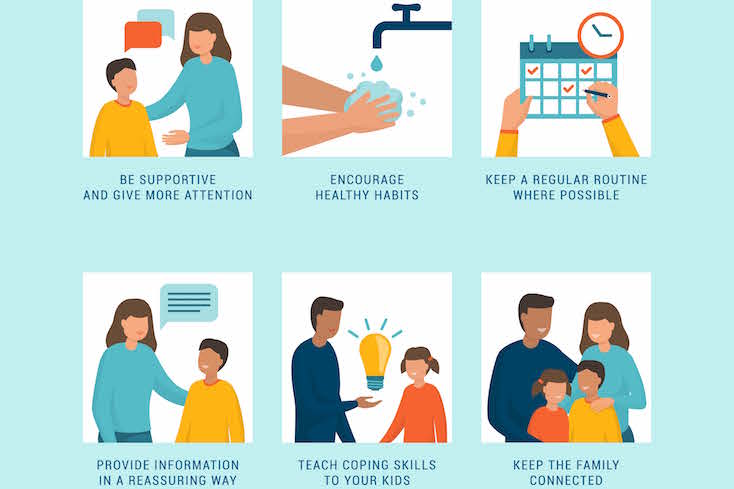
COVID-19 has changed our lives in ways we never would have imagined.Discussionsabout the virus dominate the news.Many schools and businesses are closed orrunningremotely. Sports events, concerts and movietheater showingsare canceled.So, it’s not surprising that many of us are feeling more stressed and anxious these days.
Kids, too, may be feelingworried—especially if they alreadyhavean anxiety disorder.Fortunately, there are things we can do to help our kids cope. Butfirst, parents and other caregivers must ease their ownconcerns.
Childrentaketheircues fromthe adults who care for them.If you’re anxious, then it’s very hard to calm your kids. If you’re morerelaxed, then it’s easier to soothe their fears.
So, here are a few steps you can follow to ease COVID-19 anxiety for yourselfand your kids.
Step 1: Get the facts
As the saying goes, “knowledge is power.” In any situation, one way to reduce stress is to know the facts. With COVID-19,though, it seems like informationis everywhere.Whatwe know about this new virus changes quickly,too. So,it’s hard to knowwhat’s true and what’s not.
Tofind the factsabout COVID-19,andnot beoverwhelmed,it’s a good idea tostick withjust one or two trusted resources.Choose well-respected national medical groups liketheNational Institutes of Health(NIH), theCenters for Disease Control and Prevention(CDC), or theAmericanAcademy ofPediatrics(AAP).Or, use other resources you alreadyknow andtrust—like your doctor’s office website.
Factsoften can help reduce stress, especially forchildren with anxiety disorders.If yourchild isfearful of sickness, for example,youcan remindthemthat the reason people are staying home is to stop the virus from making people sick.
Step 2:Establisha routine
COVID-19is disruptingourdaily livesinalot of ways.Kids may be going to school online, for example, while parents work from home.
Althoughthe amount of impact is different for each person, everyoneis still affectedtoonedegree oranother.Creatingadailyfamilyroutinecanhelpadults and children alikeregain anewsense of “normal.”
One way to do this is bystructuring your children’s day as closeas possibleto what itwasbefore COVID-19. For example, have them:
- Wake up,get dressedand eat breakfast at the same time they did when going to school.
- Go to a non-distracting area of your home to work on school assignments during the hours theyusually would be in school.
- Copy the school schedule by switching activities every 30-40 minutes or so.At“lunchtime,” eat lunch together.
Step3: Engage in self-care
It’s always important for kids to get enough sleep, eat healthy food and engage in physical exercise. During times of anxiety, these self-care activities become even moreessential.
You may want to think about the types of activities thatrelaxyour childwhen they experienceother stressful events. What do you do to relieve fearsat the beginning of a school year, for example? Build thosesamesoothing activities, as well as self-care actions,into yourfamilyroutine.
Step 4: Stay connected
“Social distancing” measures are meant to keep people healthy. However, children maybesad or even mad about needing to limit their in-person interactions with friendsand family.
To keep kids from feeling alone, help them stay connected with others in new ways.Use technologylike Skype, Zoom, Facetime or other appstoset up “virtual playdates.”Let friends play a game or eat together.Go on a neighborhood web page and let kids shop online for groceries for an elderly neighbor.Or,justset up regular times foryour childrentotalk withtheirfriends on the phone.
The same holds for adults, as well.Meet virtually with business groups, friends or familyregularly.Don’t let physical distancing keep you away fromyoursocial support networks.
Step5:Focus on the positive
Children with anxiety often perceive threatening situations to be more of adangerthan theyreallyare, and it takes longer for their bodies’ stress response to “turn off.”But reassurance from parents can go a long way toward calming them.Let kids know that even though there’s still much to learn about COVID-19,it’s up to the adults to figure it out,andthey don’t need to worry. Stay positive. Talk about all the things people are doing together to help each other and stay healthy.
It’sa conversation you may need to have many times over the coming days. But one of the best ways to reduce anxiety is simply to maketime to talk.
Dawn O’Malley, Psy.D., is a licensed psychologist and a Peer Advisor atCardinal Innovations Healthcare. She has spent more than 25 years working with children and families, with specializedexpertisein trauma therapies. She has designed and implemented trauma-informed programs for both residential and community-based agencies. She has served as the Clinical Supervisor for Partnering for Excellence, a state-wide pilot program to improve outcomes for children in state custody diagnosed with Post-Traumatic Stress Disorder. Dawn is a Fellow of the Child Trauma Academy, a nonprofit organization dedicated to researching and training on the effects of adverse experiences on the developing brain.

We’re always accepting submissions to the NAMI Blog! We feature the latest research, stories of recovery, ways to end stigma and strategies for living well with mental illness.Most importantly: We feature your voices.
Check out our Submission Guidelines for more information.