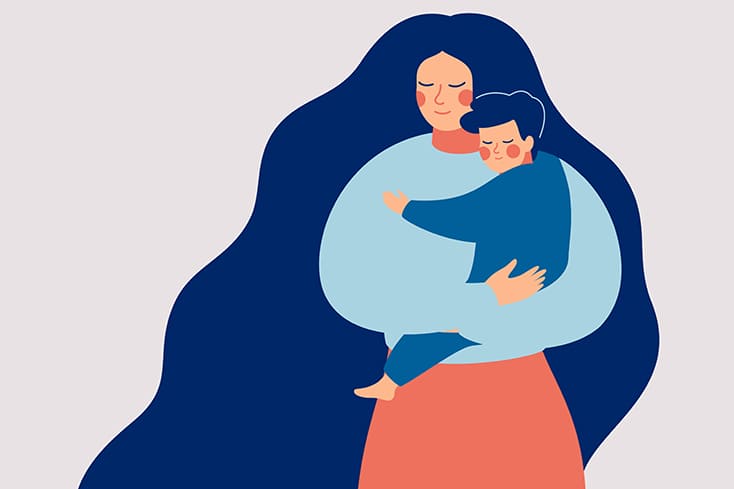
On March 22, 2010, my life changed forever when I became a first-time foster parent to a beautiful 10-day old,two-monthpremature, baby boy. I knew that becoming a foster parent would mean major lifestyle changes. I didn’t know that my connection to this child would change the essence of my being.
I was told that 99% of children taken at birth don’t go back to their birth parents, but this one fell in the 1%. Atsix months old, this dear sweet baby boy was returned to his birth mother. In those six months that I had interacted with his birth parents, I learned about what I can now call “generational trauma.”
When My Son Was Taken Away from Me
In order to stay in his life, I had to let my foster license go when he was returned to his birth parents.For the next six years, the birth parents and I had a tumultuous relationship. I felt,and continue to feel,such compassion for them both — as they grew up in survival mode withoutthe foundation of love, life skills and the village many of us take for granted. I learned of horrific experiences the birth mother experienced. And at some point, I wondered howshe could be expected to care for this child — or the other 10 she lost to the system long ago.
At age five, the child of my heart spoke of dying by suicide. I shouldn’t have been surprised because he’d heard it from his birth mom daily, but it broke my heart in a million tiny pieces. After an overnight observation at a behavioral health facility, the threat was brushed off as bullying at school. This incident told me that the observation psychiatrist did not read a word of his file.
At age six,this brown-eyed angelattempted to die by suicide twice. The system told me he didn’t mean it. They saidhis mom’s death threat wasn’t made against him, it was made against me, so it didn’t matter.He was taken to an in-patient behavioral health facility.
When I Finally Got Him Back
Although I talked to attorneys and child advocacy groups overthe years, I was told there was no path to custodybecause there was no blood shared between us(and that meant there was no way to get him help). But then,I remembered my estate planning attorney shared the names of three family law attorneys andthe next three days changed everything:
Day 1: I called all threefamily lawattorneys and the last one was the charm. Talking to the paralegal let me know I was with the right person. Thesame day,the birth father terminated theservice provider who was trying to provide therapeutic services.
Day 2: I met with the attorney, he collected my evidence and made me aware of “in locos parentis” — in place of the birth parents — or simply that I had been acting like his birth mother most of his life. Thesame day, I received a call that thebirth father withdrew him from school.
Day 3: We went to court and got domestic violence restraining orders on behalf of my son and me, as well as emergency custody. I took the protection orders to behavioral health immediately. Shortly thereafter, the birth father went to behavioral health to check my son out of the facility. However, due to the restraining order, he was not allowed on the floor.
Getting Him on the Path to Healing
My sweet, innocent child had experienced more trauma than anyonehad imagined. He had seen his birth mom try to kill his birth dadmultiple times. He also saw his mom strike me in the face. This became a major traumatic eventfor him(and me). He saw drugs, domestic violence,pornand so much more.
My sonwas put in the position of an adult with adults who wereemotionallyfrozen in their childhood, who lacked maturity, understanding and empathy. But I can’t blame them; this was all they knew.
SinceOctober 2016, we’ve been on the path to healing. Trauma-focused cognitive behavioral therapy (TF-CBT) is what has worked best. We had sessions together, we processed and we grew together. It took a few tries to find the right mental health professional, but I met people along the way who cared, who went above and beyond. Intensivein-hometherapy was helpful once we got to the third service provider. We created a plan that worked for my son.
After two years in court, tons of money and so much stress and fear, the adoption is final and my son is doing well. Despite the diagnoses of PTSD, ADHD,DMDD, major depression and anxiety, I have a resilient child who is playing tackle football, thriving from music therapy, and increasing his gross motor skills through daily activities and occupational therapy.
I’ve been dealing with situational depression and anxiety, too. I have to force myself to engage inself-care, but I do. Although I have moments in which I’m discouraged, I focus on hope.
I keep trying to make things better. Helping one child, one parent, one situation, matters.
Carla A. Carlisle is an author, speaker, and mental health advocate. She penned her first memoir, Journey to the Son, to prompt discussions about the impact of trauma on children. Carla is a member of Alpha Kappa Alpha Sorority, Inc. She earned her B.A. in sociology from Indiana University, Bloomington, an M.S. in human resources management from American University in Washington, D.C. and another in organizational development from Johns Hopkins University in Baltimore, Maryland.