
Refine by:
-
Work Requirements For Medicaid Hurt, Not Help
Recently, the Centers for Medicare & Medicaid Services issued a letter supporting work requirements for non-disabled Medicaid enrollees. Rather than spending limited public resources on enforcing mandatory work requirements, NAMI urges states to invest in supported employment programs. -
A Federal Vision for Improving Mental Health Care
The Federal Intergovernmental Serious Mental Illness Coordinating Committee (ISMICC) released an interim report to Congress today. The report contains many recommendations for improving the national response to adults with serious mental illness (SMI) and children with serious emotional disturbance (SED). -
Mental Health Deserves Equal Treatment
On Nov. 30, NAMI released its third nationwide parity report, The Doctor is Out, which found that despite the federal parity law, people lack the same access to mental health providers as they have for other medical providers.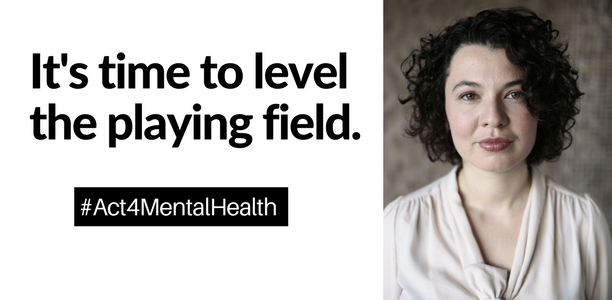
-
NAMI Releases Parity Report Which Finds Insurance Companies Still Discriminate Against Mental Health Care
A report released today by NAMI reveals new information about the ongoing barriers people with mental illness experience when trying to find affordable, quality mental health care. -
Who Knew Tax Reform Impacted Mental Health?
Tell Congress that tax reform shouldn’t harm people with mental illness. -
A SAMHSA–Sponsored Webinar: “Parity: Access to Mental Health and Substance Use Care”
Join NAMI for a webinar that will explore the current status of federal parity law and share tools that were developed by the White House and SAMHSA to help ensure people get the right care at the right time. -
Mental Health on Capitol Hill Update
The White House has announced plans that would make significant changes to mental health coverage. Meanwhile, congressional leaders are working toward reauthorizing the Children’s Health Insurance Program (CHIP) and have forged a tentative bipartisan agreement to stabilize the insurance markets. -
Can Stigma Prevent Employment?
People living with mental illness are typically held responsible and blamed for their behavior and symptoms. Simultaneously, they are perceived as unable to make decisions for themselves. This causes people with mental health conditions to be perceived as “unsuitable” for the workforce. -
Outreach and Engagement for Early Psychosis
A first episode of psychosis can be scary and isolating. Treatment can have little appeal and feel highly stigmatizing. Recovery-Oriented Cognitive Therapy is an evidence-based approach that skirts these (and many other) common challenges of working with young adults who have psychosis. -
NAMI Proudly Supports Expansion of Excellence in Mental Health Act
On October 3, U.S. Senators Debbie Stabenow (D-MI), Roy Blunt (R-MO) and Representatives Leonard Lance (R-NJ) and Doris Matsui (D-CA) introduced S 1905, a bill to expand the Excellence in Mental Health Act pilot program, which supports the implementation of Certified Community Behavioral Health Centers (CCBHCs).