Three years ago, I was diagnosed with borderline personality disorder (BPD) when I was first in the psychiatric ward at the local hospital. I added that to my list of mental health conditions that my psychiatrist had diagnosed me with: severe depression and anxiety, attention deficit hyperactivity disorder (ADHD) and posttraumatic stress disorder (PTSD).
Aside from me suffering the most with PTSD, I also struggle with BPD. Once I learned of my diagnosis, I researched it as much as I could. I asked mental health professionals about it, Googled it and read just about every article and book about it. I realized I had suffered from BPD since I was in pre-school. The symptoms of BPD fit me perfectly. I had a fear of abandonment, extreme mood swings, self-harm, suicidal behavior, disassociation, random fits of rage, dangerous impulsive behavior, isolation and a history and pattern of unstable relationships.
My parents have been nothing but understanding, compassionate and have made a treatment plan for me just in case I hit rock bottom. They ordered books about how to deal with people with BPD and studied up on it. Prior to my hospitalization, I avoided telling my parents how I was feeling and would cope by self-harm. Now, I talk to them when I am feeling worthless, ugly and like I don’t deserve to be alive. During these times, they stay close to me without suffocating me and patiently listen to me whenever I have something to say.
My close friends weren’t as surprised as I thought they’d be. They knew about my seeking mental professional help, so when I explained to them that I had BPD and what it was, they passed no judgement, checked up on me at least once a day and asked me if there was anything they could do to help me feel at least somewhat better when I was showing signs of hitting rock bottom.
Hitting rock bottom was a traumatizing and difficult situation. I allowed BPD to consume me completely. I let it control me and my life. I was struggling and in pain and all I could think was “I don’t deserve my life. I have such a great life but I fail to appreciate it because of BPD. I may as well just die and let someone else replace me.” It is then that I feel guilty, ashamed, like a failure and embarrassed for the pain and worry I caused my family and friends.
After being correctly diagnosed, learning about it and seeing an amazing therapist once a week, I am proud to say that I have been self-harm free for about two years and am slowly recovering. I no longer have fits of rage, extreme mood swings and am aware and active in suicide prevention.
Having mental health conditions has given me a purpose in life. I can relate to those who struggle with mental illness and offer them advice whenever they are feeling overwhelmed. I have gone to high schools and spoken to them about my struggles and difficult times. I also speak out about my experience with suicide, hoping that any student who does not feel 100%, recognizes that and seeks help. My goal in life is for people to feel less alone and address any issues people with mental health conditions have.
I have come a long way from the time I first time I sought out help for my mental health. I know that I will continue to have days where I don’t want to get out of bed, feel as though the world is too much to handle and just want to disappear and leave all my responsibilities. I fight those feelings with coping strategies I learned from my therapist and making sure I take my medication.
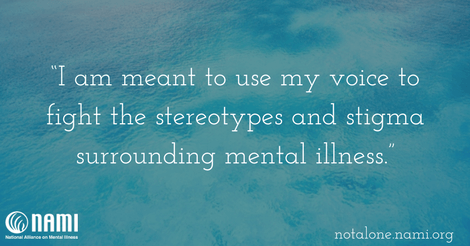
I am finally at a place where I am stable, logical, rational, aware of those around me and able to recognize my suicidal ideations are nothing but a mere feeling and the urge to just grab a sharp object is not the way to go. There is so much more to my life. I am alive and well for a reason. I am meant to use my voice to fight the stereotypes and stigma surrounding mental illness. I am meant to live.