
Refine by
351 results found
-
NAMI’s Ask the Expert Webinar: Antidepressants: How Do They Work?
Major Depressive Disorder continues to burden millions of people. Recognizing that many people will also benefit from therapy, this presentation will review antidepressants used in both short- and long-term treatment plans. -
Register Today for NAMI’s Ask the Expert Webinar on Antidepressants
Register Today for NAMI’s Ask the Expert Webinar, Antidepressants: How Do They Work? on Wednesday, June 26 from 2:00–3:30 p.m. EST.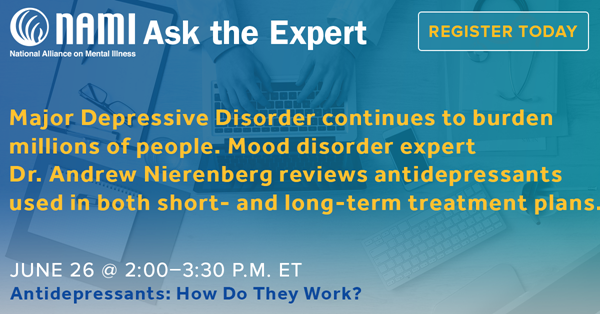
-
How TV Shows Make Me Feel Less Alone
"When my depression hits, my body feels restricted, as though a weight I cannot see has made a home on my chest. The only thing I latch onto is knowing I’ve come out of it before. I think we all need that one thread to help pull us through." -
The Power of Emotion Education
Research has shown that burying emotions can lead to symptoms of mental illness. Learning how to safely process traumatic emotions is an important piece of reducing the growing trend of depression and suicide. -
Four Lessons From Four Years of Therapy
After going through four years of therapy, here are Laurie's tips for getting the most our of your mental health care. -
Treating the Whole Person
"We must break down the silos that separate physical and mental health, because everything is connected: Physical symptoms affect a person’s mental health, and a mental health diagnosis may increase the risk for physical health-related issues." -
Millennials and Mental Health
Millennials are more likely to talk about mental health than their parents or grandparents. And as more young people speak out, the stigma surrounding mental illness is beginning to lessen. -
Growing up Without Mental Health Support
"It’s baffling, as a mental health advocate now, that no teacher, no adult or anyone close to me had noticed the warning signs. I had no therapy, no one asking me how I was doing. There were no questions about my wellbeing. I was just labeled as a shy child." -
Combatting the Loneliness of Mental Illness
When you have mental illness, it can be hard to find others who understand. And the loneliness can make symptoms even worse, creating a cycle of isolation. Here are a few ways to stay connected even during challenging phases of mental illness. -
Conquering Each Day with Dissociative Identity Disorder
"Sharing a mind and body with several unique identities ensures a chaotic life. However, I’ve found that we [my "parts" and I] have the power to safely guide ourselves by implementing helpful interventions."