Refine by
427 results found
-
Understanding the Spectrum of Bipolar Disorder
Beyond occasional reference to Types I and II, bipolar disorder is usually viewed as one condition. Ignoring the spectrum breeds confusion and prevents the public from better understanding the complexity of this illness. -
A Diagnosis of Mental Illness Need Not End a College Career
Contrary to what many believe, young adults with mental health conditions are capable of completing a college education. Here's how colleges and parents can help ensure success. -
Join SAMHSA’s Sponsored Webinar About The HIPAA Privacy Rule
Join us on Wednesday March 28, 2018 from 2:30-4:00 pm EST for the Substance Abuse and Mental Health Services Administration Sponsored Webinar, “Myths and Reality: The HIPAA Privacy Rule.”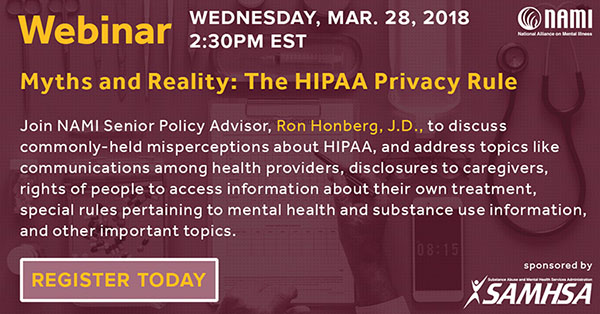
-
5 Myths We’re Taught About Relationships
There are many widely-believed myths about relationships, and because they are so important to our well-being, keeping these myths alive can worsen depression, anxiety or other conditions and symptoms we may have. Here are five of the most common relationship myths we should stop following. -
NAMI’s Statement Regarding President Trump’s Recent Comments on Mental Health Care
President Trump’s stigmatizing comments about mental illness reinforce harmful stereotypes and create barriers for people trying to access care. Part of NAMI’s mission is to get people into mental health treatment, and we are willing to work with the Trump administration to improve mental health services in the U.S. -
When Your Parents Have Mental Illness: Healing Childhood Trauma
“Maybe you’ve spent your life watching your mother or father struggle with anxiety, depression or obsessive-compulsive disorder. So, what can you do if you grew up with parents or siblings experiencing mental illness, or in a family with a history of abuse or neglect?” -
NAMI Statement on the Parkland School Shooting
NAMI is deeply saddened by the tragic school shooting that occurred yesterday in Parkland, Florida. Here are steps we can take now to educate and intervene early to break down barriers of understanding, and put an end to the stigma that often prevents people from getting the help they so desperately need. -
How Do I Know if My Therapist is Effective?
While it is important for therapists to be educated, trained and up-to-date on current practices, there is so much more to a good therapist than just their background and education. -
Why Don’t More Olympians Talk About Mental Illness?
Many Olympians have commented that the mental aspect of the game far exceeds the physical. So why is it that Olympians are so often asked about their physical health, but rarely about their mental health? -
Reviving Herbie the Love Bug to Rival Depression
"With Herbie, I love people. I love their smiles and their questions. He’s good for me, for others and for my depression."