Refine by
237 results found
-
APA Releases Findings From 2023 Work in America Survey
In April 2023, the American Psychological Association (APA) surveyed 2,500 American adults about mental health in the workplace. About 1 in 5 workers (19%) rated their workplace as being very or somewhat toxic. These workers were more than twice as likely to have fair or poor mental health (58%) than those who rated their workplace as healthy (21%). And while a majority of respondents are satisfied with the mental health support they receive from their employer, there are significant areas for improvement. Fewer than half of respondents (43%) reported that their employer provides health insurance with coverage for mental health and substance use disorders. To learn more, see the findings from the American Psychological Association. -
Hope Starts With Us: Bebe Moore Campbell’s Legacy – Mental Health for All
In this episode of NAMI’s podcast, NAMI CEO Daniel H. Gillison Jr. speaks with friends of Bebe Moore Campbell, Dr. Linda Wharton-Boyd and Nancy Carter about Bebe’s impact and how we can all play a role in keeping her legacy alive. -
Letter to CORE Researchers on Research and Innovation
Letter to CORE Researchers commenting on a quality measure for inpatient settings for future use by CMS. -
Hope Starts With Us: Pride & LGBTQ+ Mental Health
In this episode of NAMI’s podcast, guest host Matt Raymond, NAMI communications director, speaks with Rosemary Ketchum (former board member of NAMI Greater Wheeling, WV, and first openly transgender official to be elected in West Virginia) and Frank Grimsley (body-positive, queer content creator, brand collaborator, licensed therapist, school social worker and TV personality) in honor of Pride Month about LGBTQ+ mental health.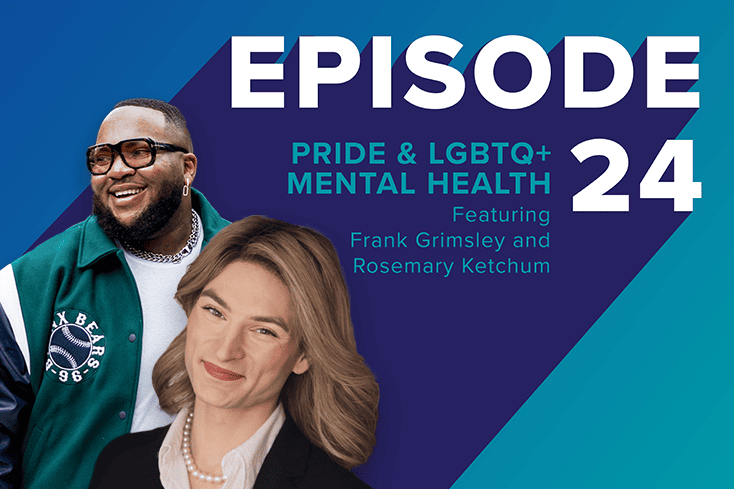
-
Hope Starts With Us: Maternal Mental Health & Bipolar Disorder
In this episode of NAMI’s podcast, NAMI CEO Daniel H. Gillison Jr. speaks with actor, mental health advocate and NAMI Ambassador Alessandri Torresani, about her journey with maternal mental health and bipolar disorder. -
New Research Suggests Positive Parenting May Protect Youth Brain Development from Effects of Childhood Stress
Childhood stress and adverse childhood experiences (ACEs) negatively impact the brain development of children as shown in decreased hippocampal volume. However, positive parenting strategies, such as expressions of warmth and support, may help protect against developmental deficits. Researchers compared brain structures and behavioral health of children aged 10-17, as well as youth- and caregiver-reported positive parenting. Children who reported high levels of childhood stress and positive parenting did not show increased behavioral health concerns or decreased hippocampus volumes, as opposed to children who experienced high levels of childhood stress but not high levels of positive parenting. Notably, caregiver-reported positive parenting did not predict either behavioral concerns or hippocampal volume. The findings suggest that positive parenting can be a protective factor against adverse childhood experiences, and demonstrate the importance of including youth perspectives directly in research. To learn more, read the study in PNAS Nexus. -
Letter to Congressional Bill Sponsors on Research and Innovation
Letter to Representatives Mace and McCollum expressing support for the Nonprofit Stakeholders Engaging and Advancing Together (Nonprofit SEAT) Act, which would establish government structures and policies that deepen the relationship between nonprofits and government and help nonprofits achieve their missions. -
SAMHSA Releases NSDUH LGB Behavioral Health 2021-22 Report
The most recent update of results from SAMHSA’s 2021-2022 National Surveys on Drug Use and Health (NSDUH) highlights mental health disparities faced by sexual minority adults, particularly bisexual females. More than half of all bisexual females had any mental illness (AMI) in the past year (53.9%), compared to 38.7% of lesbian and 25.4% of straight females. 43.3% of bisexual males experienced AMI in the past year, compared to 37.5% of gay and 18.1% of straight males. About 1 in 5 (19.5%) bisexual females and 14.4% of bisexual males experienced serious mental illness in the past year. Future surveys will ask respondents about their sex assigned at birth, gender identity, and sexual identity regardless of age in hopes of better capturing the experiences of LGBTQI+ individuals. To learn more, view the report from SAMHSA. -
Lived Experience-Led Research to Address Early Death in People with Serious Mental Illness
Compared to the general population, people diagnosed with serious mental illness (SMI) face a shorter life expectancy by approximately 10 to 25 years. In May, a virtual roundtable convened 40 individuals – many with firsthand or caregiving lived experience – to address this disparity. Participants drafted an eight-point ranked recommendation to increase the lifespan of people with SMI including, but not limited to, understanding the impacts of trauma, furthering the role of support systems, redefining clinical education, and examining outcomes meaningful to those with SMI. The effort represents an important shift toward highlighting lived experience in identifying research priorities. To learn more, read the article in JAMA. -
Study Reviews Suicide Intervention for Veterans
Caring Letters is a suicide prevention intervention in which individuals receive letters of care and support with the goal of facilitating connection and lowering suicide risk. The Department of Veterans Affairs implemented a Caring Letters program in 2020 for all Veterans who contact the Veterans Crisis Line. A recent study adds to the evidence that the intervention is effective for this population. Researchers interviewed 23 Veterans who received nine letters over one year that included messages of support and mental health resources. Most participants reported that the letters had a positive impact, with some indicating they were more likely to engage with resources. However, they also offered areas for improvement. To learn more, see the study in Psychiatric Services.