
Refine by
83 results found
-
Building Connections: How Relationships and Time with Peers Can Improve Mental Health
One factor we can control is the quality and quantity of our children's connection to peers. -
Developing Strategies and Finding Community: My Experience in Support Groups
Hearing one another’s stories, weighing different approaches, being reminded of self-care and comic relief — all of that is heartening. -
Understanding and Assessing Self-Harm: What You Need to Know
It is crucial to identify the signs and symptoms of self-harm to provide the appropriate care and treatment. -
Hygiene Indifference: The Symptom We Don’t Talk About
Our ideas about the morality of cleanliness can shape how we view mental illness. -
Ask Dr. Christine: Youth Mental Health
We must find opportunities to lean into conversations about mental health, no matter how uncomfortable those conversations may be. -
NAMI Applauds FCC Leadership on 9–8–8 Crisis Number
NAMI applauds Chairman Ajit Pai and the FCC for their leadership on this issue and strongly supports the creation of a national 3-digit number as an essential part of a network of services and supports for people experiencing a mental health crisis. -
NAMI Acting CEO Talks About the State of Mental Health on C–SPAN
Angela Kimball, NAMI's Acting CEO, was on C-SPAN Washington Journal for a 30-minute segment about the state of mental health in America.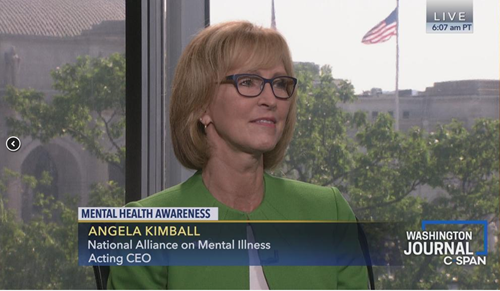
-
NAMI Speaks out Against Harmful Ruling
On Friday, December 14th, U.S. District Court Judge Reed O’Connor ruled that the Affordable Care Act (ACA) is unconstitutional in the case Texas v. USA. NAMI is joining a group of 38 patient groups in speaking out against this ruling. -
NAMI Excited with New Opportunities to Improve Medicaid Mental Health Care (IMD)
Today, Secretary Alex Azar, U.S. Health & Human Services, announced that the Administration will allow states to apply for Medicaid waivers to pay for mental health treatment in inpatient settings known as IMDs, or institutions of mental disease. -
An Ode to Schizophrenia
"My mind split, but it seemed to repair itself enough to get by. I learned one thing that proved to be true in the real world: When you struggle with an invisible disease, many won’t believe you."