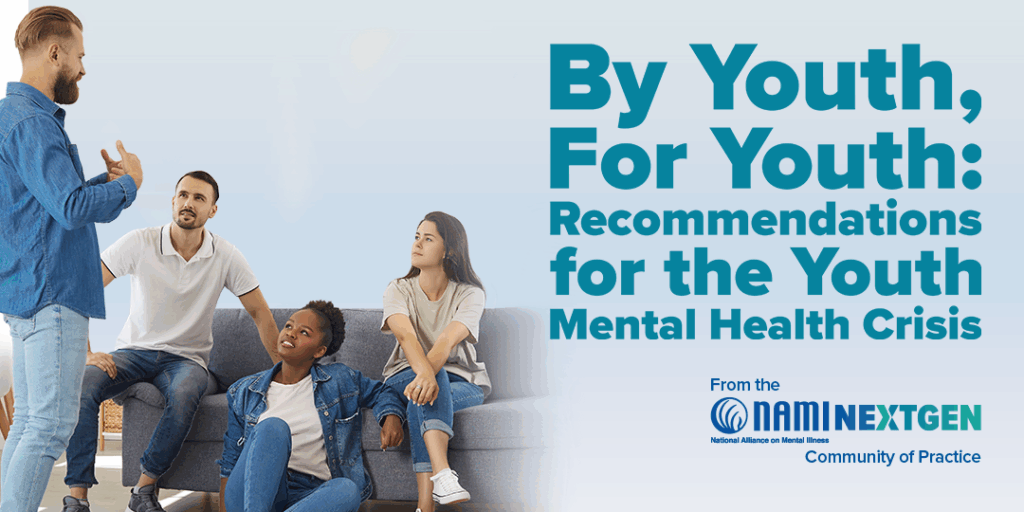
2024 NAMI Next Gen Community of Practice Report Features Four Recommendations From Youth and for Youth
About the Report
The 2024 cohort of NAMI’s youth advisory group, NAMI Next Gen, wanted to learn from their peers what exactly youth want for mental health support. With guidance from NAMI staff, they created the NAMI Next Gen Community of Practice. This collective united 50 youth and young adult mental health advocates from across the country.
Together, the Community of Practice members developed the recommendations found in “By Youth, For Youth: Recommendations for the Youth Mental Health Crisis.” Based on their own experiences as college students, NAMI program participants, community leaders, and policy advocates, the recommendations highlight key opportunities for adults in the mental health field to enhance support for youth mental health.
Key Recommendations for Youth Mental Health
As the NAMI Next Gen Community of Practice explored what could improve youth mental health, their work culminated in four recommendations. Each of their recommendations addresses a key focus area for organizations working in mental health and adults who want to support young people.
Culturally Responsive Approaches: Investing in approaches to mental health that are tailored to unique cultures expands access and builds trust. By developing culturally responsive approaches, stigma could be reduced, leading to higher chances for early intervention.
Youth Leadership and Peer Support: While adults at mental health organizations have the best interests of youth in mind, it’s vital to involve youth. Funding and promoting peer-led initiatives and including youth in decision-making can make a big difference in developing effective programs.
Mental Health Education: Youth need to be equipped with the tools to identify mental health conditions and talk about how they’re feeling from a young age. Incorporating mental health literacy into school curriculum can help increase chances for early intervention.
Advocate for Policy and System Changes: As policymakers and legislators make decisions about how to fund mental health resources and education, include youth in outreach. When youth are given the opportunity to advocate, initiatives to address the youth mental health crisis can be stronger.
Quotes From Community of Practice Members
Stigma creates a feeling of shame, which can lead to years of suffering in silence and fear of being judged or shunned. Stigma can often lead to a person carrying this shame and burden for many years.
Mary Lawal
I believe there is an opportunity for schools of different kinds to teach mental health literacy to youth.
Gregory Carnesi
To improve mental health equity, it is important for mental health professionals to remember that people are diverse in their needs, worldviews, cultures, and ultimately what effective care looks like for them.
Aleeza Virani
Youth should be given meaningful opportunities to give feedback and to be part of the decision-making.
G. Matthews
For many young adults, these experiences discourage them from seeking help as they grow older, even as they enter different ecosystems and institutions that claim to support their well-being.
Saanvi Arora
Youth-driven advocacy campaigns that promote awareness of the benefits of community-based alternatives can help shift public opinion and influence policy changes.
Cadon Sagendorf
Take the Next Step
Have you downloaded the report and feel ready to do more for youth mental health? Check out these opportunities to take the next step:
Learn more about NAMI Next Gen, our ten-member youth advisory group. As of 2025, 40 young adults have contributed to NAMI’s work for youth and young adults. Meet the current members of NAMI Next Gen and our esteemed alumni.
Guided by NAMI staff and the members of NAMI Next Gen, the NAMI Next Gen Community of Practice explores topics impacting youth mental health. Together, the group of at least fifty young adults discuss how to address the youth mental health crisis and what they can do to help make change.
Do you want to support the youth in your community or youth you directly support? Check out NAMI TraumaInSight, our first trauma awareness course. Self-paced and fully online, anyone can enroll in NAMI TraumaInSight to learn how to identify youth experiencing trauma and how to best support them. Learn more and enroll in NAMI TraumaInSight today.
NAMI creates resources for kids, teens, young adults, parents, caregivers, educators, and more! Find information, resources, and activities designed to help young people develop the skills to navigate their mental health and well-being.