
Refine by
5,197 results found
-
Help Not Handcuffs: Mental Health Emergencies and Police Response
NAMI Help Not Handcuffs Webinar welcomes Ernie Stevens and Joe Smarro from “Ernie and Joe: Crisis Cops”; Dirk Butler from the Center for Policing Equity and Ron Bruno from CIT International. -
What to Know About 988, the New Mental Health Crisis Hotline
Counselors on the other end of the hotline are trained in handling a wide range of mental health issues, including self-harm, addiction and suicidal ideation, said Hannah Wesolowski, NAMI CAO. “If someone has been through a traumatic event and is struggling to process it — and there are traumatic events happening throughout this country — […] -
You Are Not Alone: NAMI’s First Book
NAMI CEO, Daniel H. Gillison Jr. sat down with Dr. Ken Duckworth to talk about NAMI’s first book.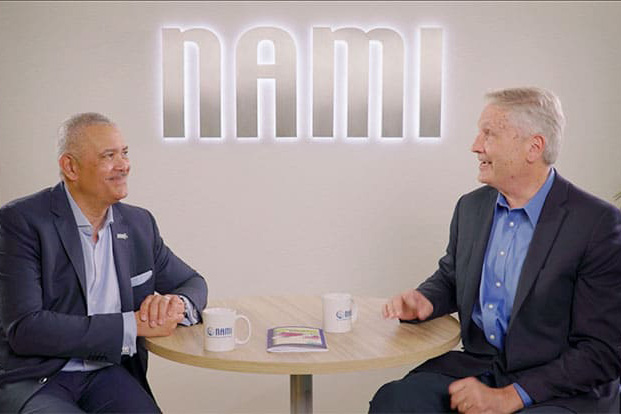
-
Genetic Testing Shows Promise for Medication Selection for MDD
Antidepressants are often one of the first treatment approaches for individuals with depressive disorders, but many struggle with side effects and finding the appropriate medication or dosage. Recent findings from a randomized controlled trial indicate that pharmacogenomic testing could be helpful in medication selection for patients with major depressive disorder (MDD). Participants who were prescribed medication and dosage based on their genetic testing results were less likely to present drug-gene interactions and more likely to experience remission over 24 weeks. However, the researchers note that the participants' improvements are not significant compared to the control group at the the 24-week mark. Pharmacogenic testing is an evolving field, and more research is needed to fully understand its efficacy for individuals with mental health conditions. To learn more, see the study in JAMA. -
Five Tips to Cope with Double Discrimination
I have found that I can use my perspective to help and educate others. -
Utilizing AI to Identify Handgun Purchasers at Risk of Suicide
Firearms are responsible for the majority of suicide deaths in the U.S. In an effort to identify handgun purchasers at risk of suicide, researchers retroactively tested the reliability of a machine learning algorithm on a database of handgun purchases in the state of California from 1996-2015. Purchasing a revolver-style handgun, female gender, white race/ethnicity, and no previous firearm transaction were associated with firearm suicide within one year of purchase. Overall, the most important variables for accurately predicting firearm suicide within one year were handgun type, race/ethnicity, purchaser age, and month of purchase. These findings shed light on alternative methods of suicide prevention and may have implications for advocates and policymakers. To learn more, see the study in JAMA. -
Letter to Congressional Bill Sponsors on Research and Innovation & Child and Adolescent Mental Healthh
Letter to Senators Smith and Murkowski, expressing support for the Improving Data Collection for Adverse Childhood Experiences Act, which will build upon previous studies on Adverse Childhood Experiences (ACEs) in innovative and equitable ways. -
Letter to Congressional Bill Sponsors on Medicare & Medicaid
Letter to Senators Brown and Portman, in support of the “All-Inclusive Medicare-Medicaid (AIM) Program for Full-Benefit Dual Eligible Individuals Act,” which would create of a new permanent option for states to integrate program financing, administration, eligibility processes, and benefits for dual-eligibles. -
Many Black children are dying by suicide, doctors say: Understanding the why — and how to help
"A lot of people are just now learning that the unfortunate reality for a lot of Black youth is that they are dying," said Dr. Christine Crawford, associate medical director for NAMI. "And a lot of that has to do with the fact that mental health conditions are often underdiagnosed or are not adequately treated […] -
With therapists in short supply, group counseling offers alternative
Teri Brister, NAMI Chief Program Officer, says peer groups can be a good fit for anyone looking for personal support and to learn from others. Although each peer group differs, the underlying goals tend to be the validation of people’s emotions, help them feel less alone, and create community. One study found that these groups […]